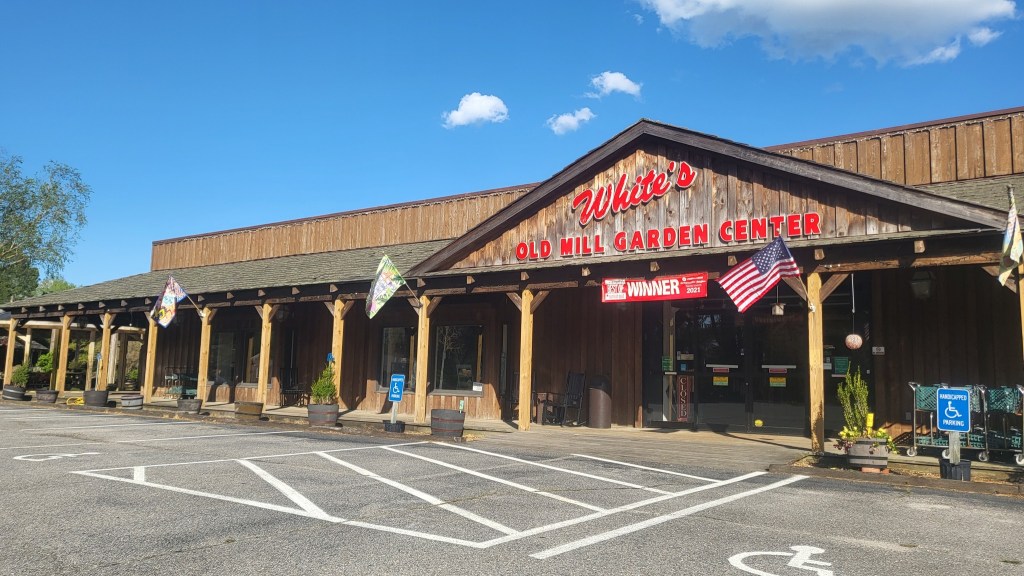
We gave our best effort to keep White’s Nursery & Garden Center going. It is with heavy hearts that we announce we will not be reopening.
Thank you for 68 years of support.”
White’s Old Mill Garden Center
A sad day for the Tidewater Big Train Operators club and for the community at large. Our organization has been doing model train shows and displays at White’s Nursery since at least 2010 and the Engineer and I have been participating since 2015. Every spring and fall we were there on Friday setting up, running trains over the weekend and taking down Sunday afternoon. The sense of camaraderie and the joy of sharing our enthusiasm with visitors of all ages made these events deeply fulfilling for us. Our hope is that we can find a new venue or opportunity to continue bringing the joy of model trains to the community, keeping the spirit of our cherished tradition alive and thriving.
As previously mentioned, White’s Nursery is our preferred venue for hosting train shows. Each participant has their own designated space, allowing everyone to pursue their individual creative vision.
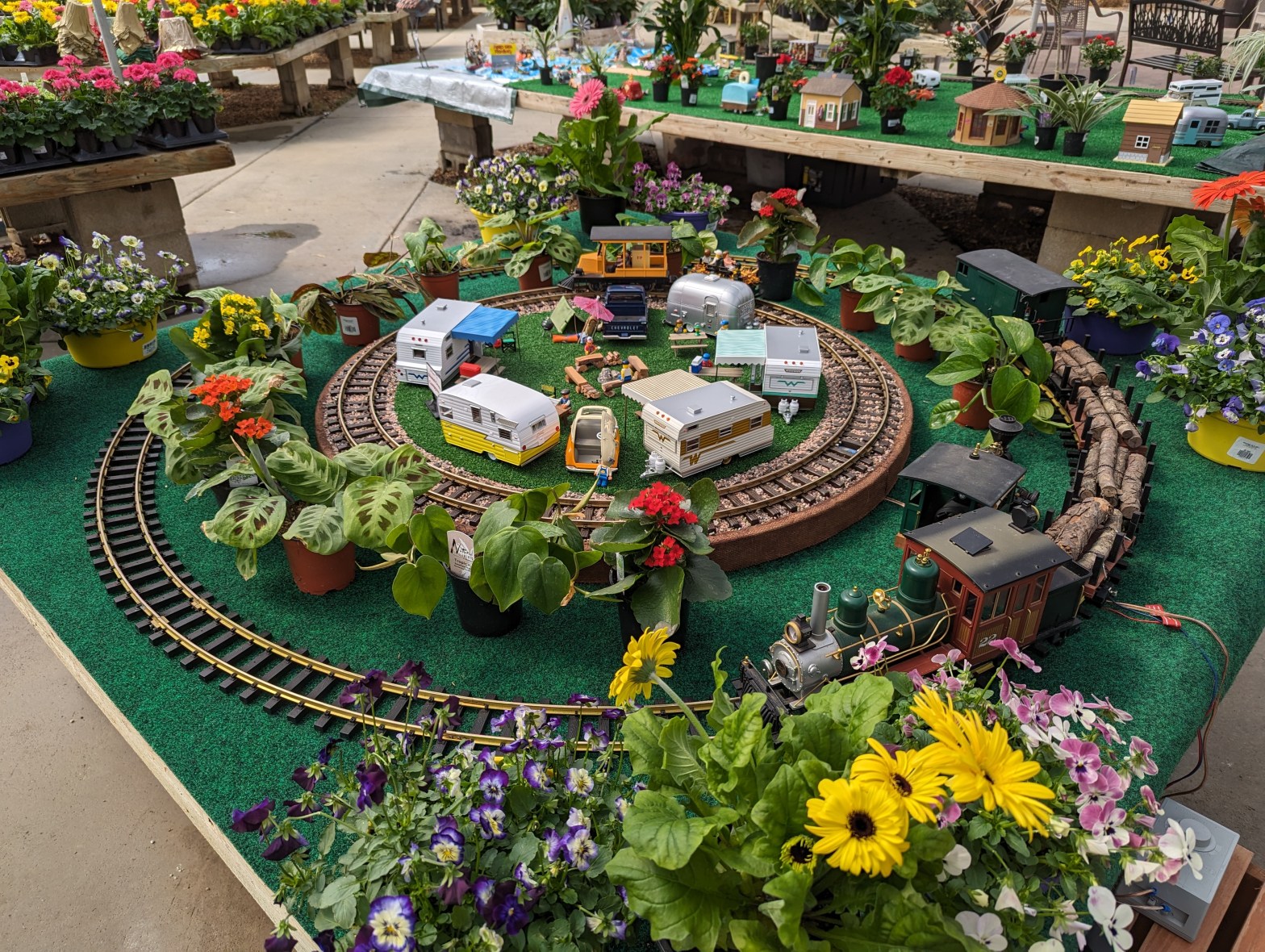
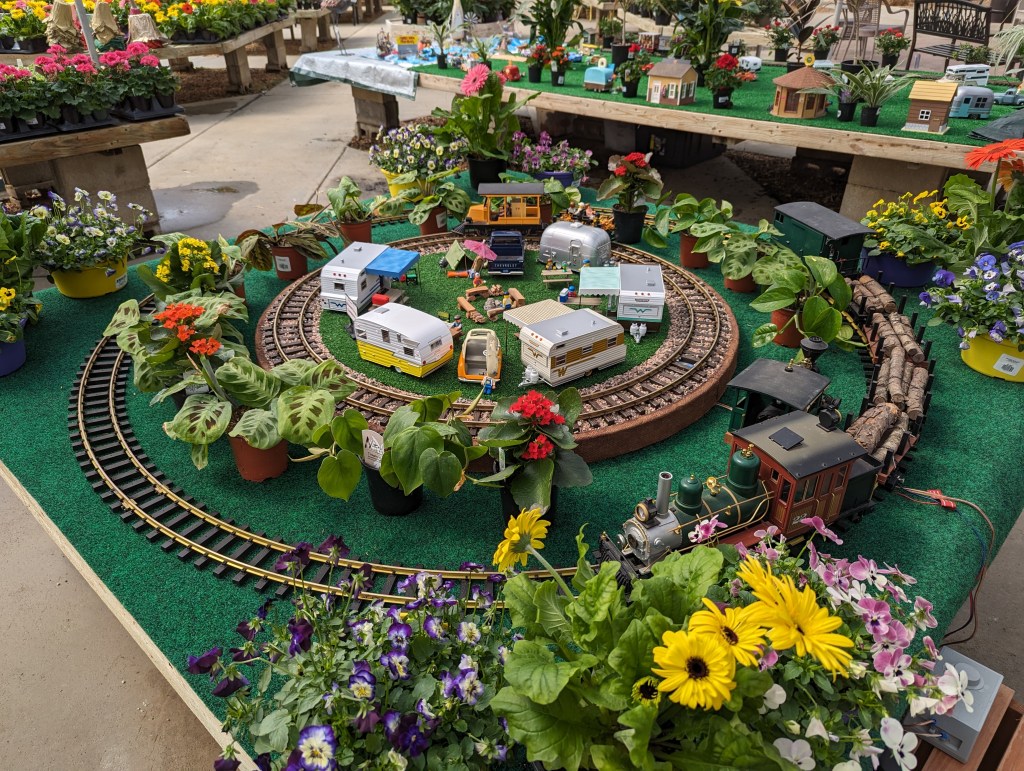
When the Engineer and I first joined the Tidewater Big Train Operators, we were committed to keeping it simple by designing layouts where all components (trains, scenery, background, etc.) could fit in our car. However, we failed at that and almost had to upgrade to a full-sized pickup truck pulling a dual-axle trailer. This season at White’s, we returned to our roots with a six by six foot table, a five-foot outer loop, and a 32″ inner loop. The table was provided by the nursery, so it all fit handily in the back of our car.
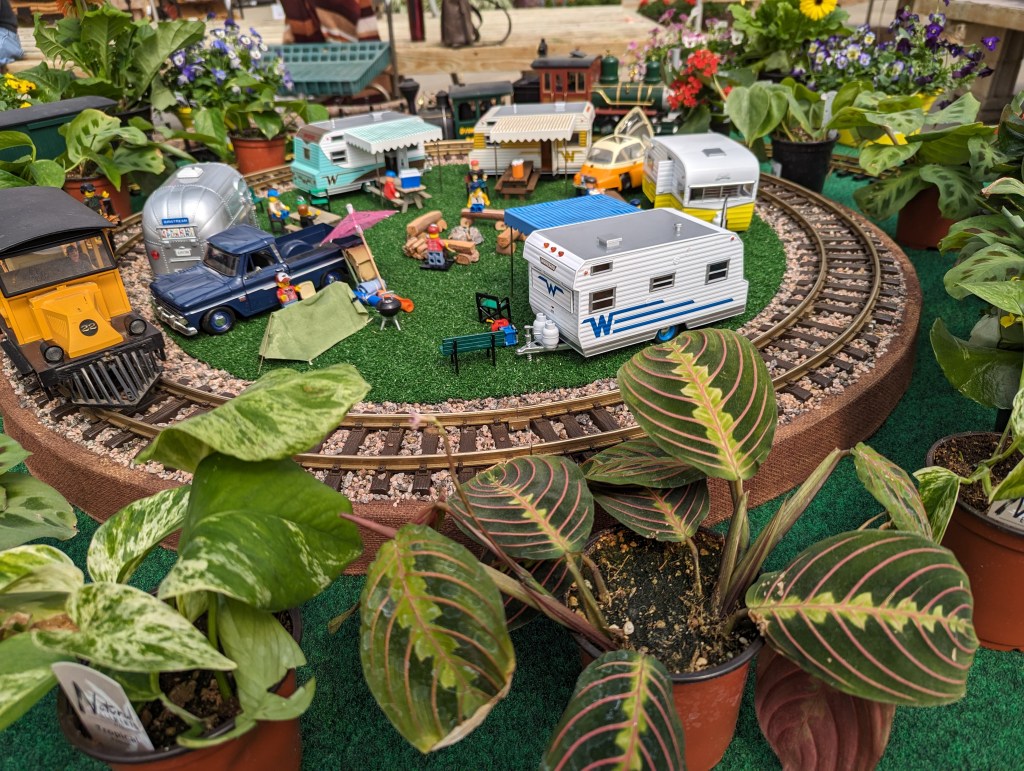
Our very first time setting up at White’s Nursery (November 2015) we did a large campground diorama. Thinking back on it now it was a bit crude, but it was our start in doing train shows and we were happy with it. A couple of years after that we picked up several 1:24 scale model camping trailers – and they have been sitting with our train show “stuff” ever since, never used. We always planned to incorporate them into a new display, perhaps with a scenic backdrop featuring a tranquil lake and some miniature hikers enjoying the great outdoors.
Once we started doing the micro-layouts, it was pretty obvious that a camping scene would fit in perfectly. (The backdrop and lake went by the wayside though.) We thought about all the little details that would make it come to life – tiny tents, miniature campfires, and even little hiking trails. As we worked on it, we realized just how much fun it was adding in all these elements and bringing the scene to life. The Lego people seemed to have their own little adventures as we placed them around the layout. Despite the small scale, the sense of adventure and outdoor exploration was palpable. The 32″ circle of ballasted track with its construction foam base provided a sturdy foundation for our camping scene, and we’ve had so much enjoyment using it. The possibilities for our tiny camping scene seem endless, and the best part is that it all fits neatly in our car, ready to bring joy and wonder wherever we go.
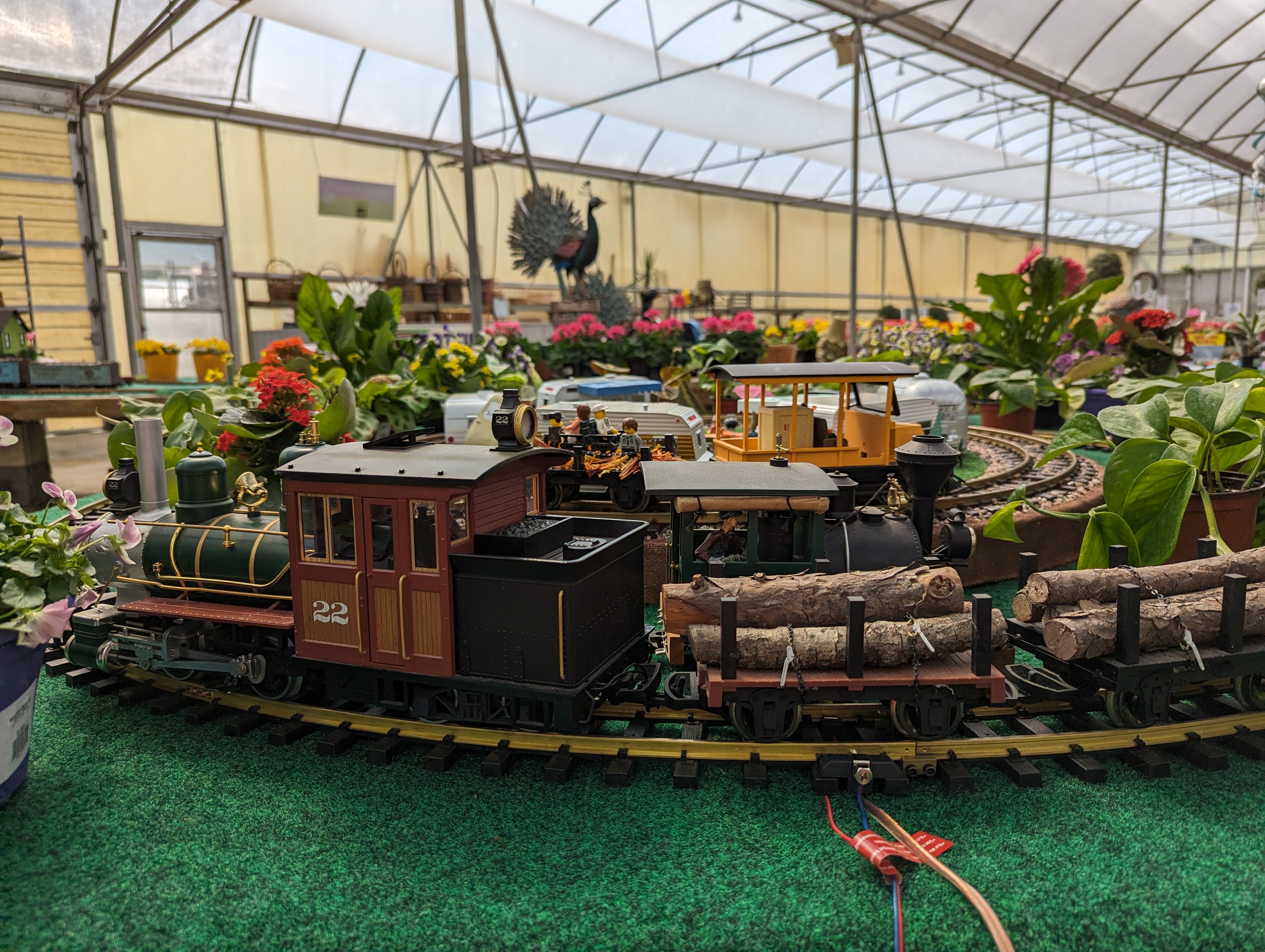
A locomotive that has long been on our wish list was the LGB trains model of a 0-4-4-T Forney. They were only made sporadically between 1992 and 2006, they never seemed to be super popular and I never saw one available at a price we wanted to pay. Until recently when the estate of one of our long time club members was sold, so now we finally have a Forney.
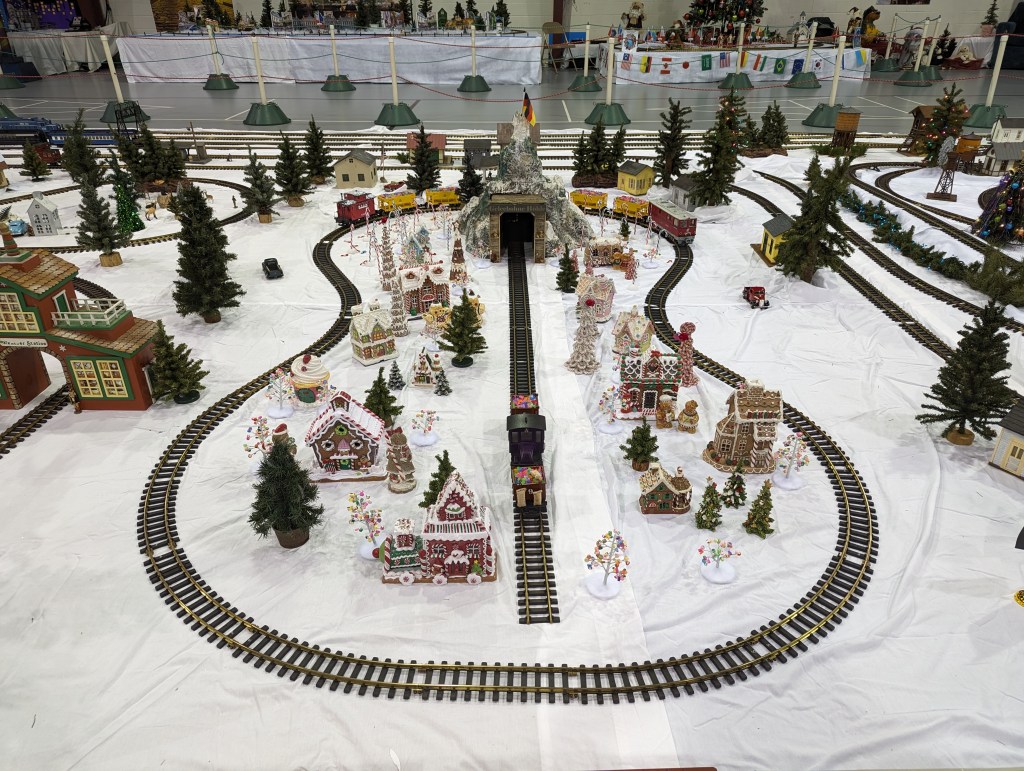
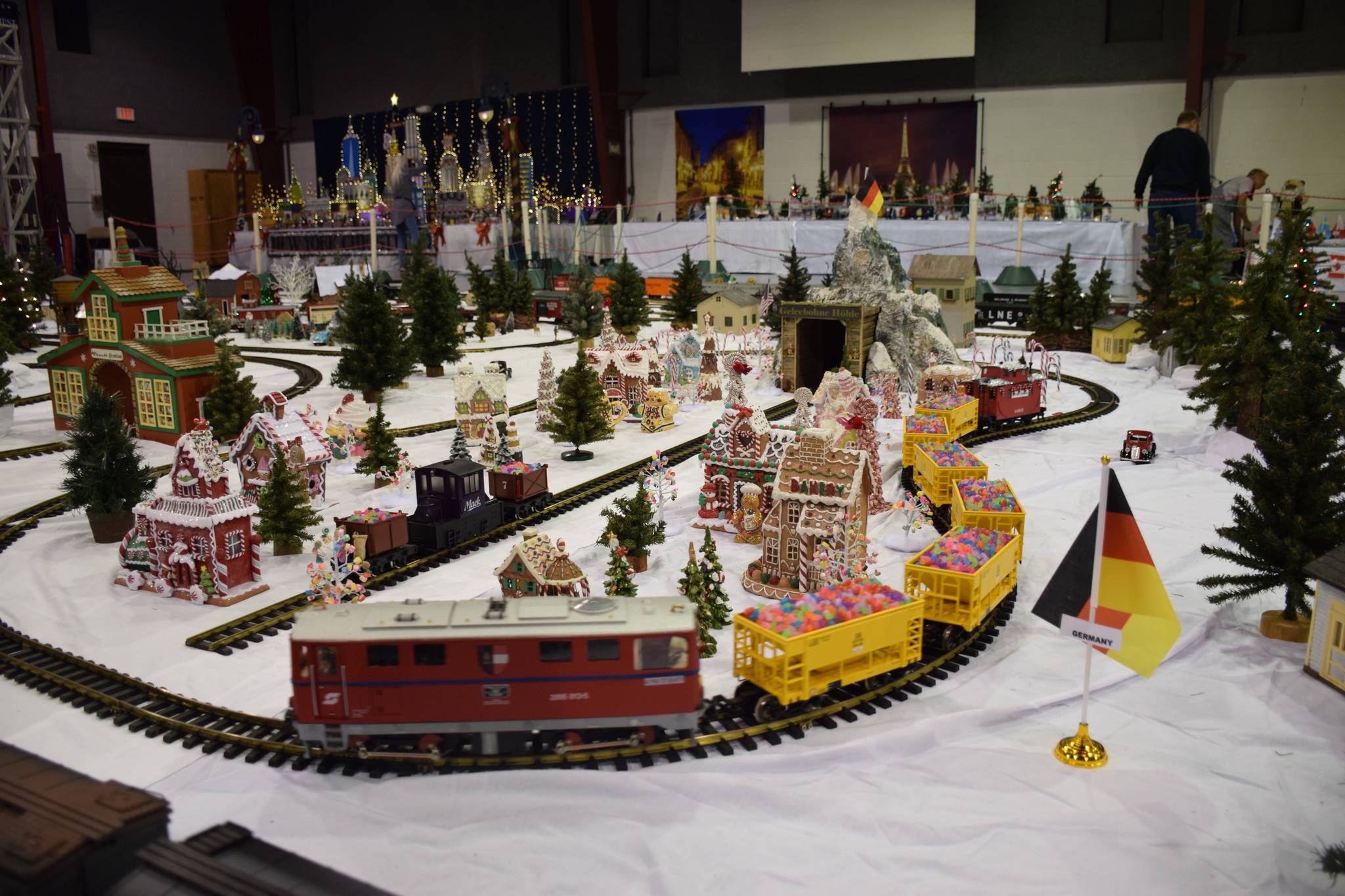
Every year our train club, the Tidewater Big Train Operators, has a large Christmas themed train show that runs for eight days. This was the first time in four years that we had an individual layout in the show. Setting up your own display for the show involves a big time commitment, not to mention expense, that was becoming hard for us to make. Especially after moving to North Carolina the event space is now an hour away from us. This year we thought we would try doing a layout in the center, common area. The trains running here are controlled by the “Trainmaster” so we would not necessarily need to be present every evening of the show.
A running conflict we have with the TBTO Holiday Show is that it overlaps with many other Christmas activities we cherish, and participating in the show can be stressful (for the Conductor – me), as well as costly to assemble everything for a display. On the other hand, our club has been hosting the show for 28 years, attracting a dedicated audience over the years. Many attendees who first joined as children are now bringing their own kids. We will continue to participate in some capacity while striving to balance it with the other happenings of the season.
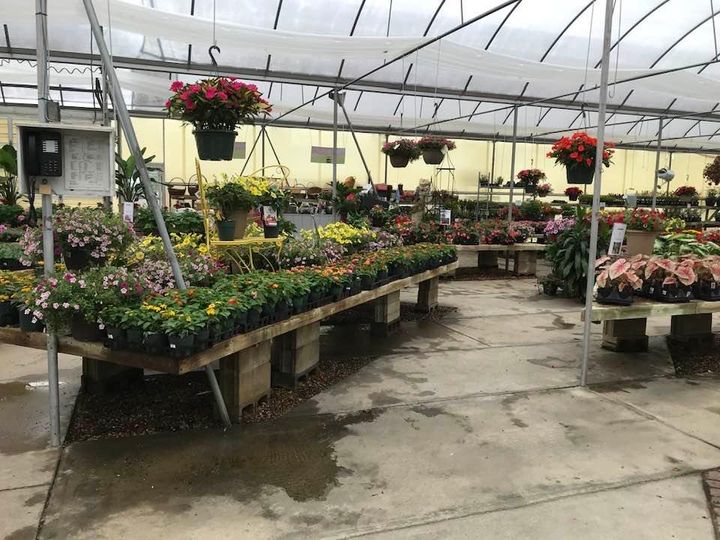
I am not sure when our train club, Tidewater Big Train Operators, started doing shows at White’s Nursery, but we have had a layout for it every fall and spring since the Fall of 2015. It is fun to run trains there as it is only for two days, the size of the layouts is limited which means less stuff to haul around and if we have empty spots in our design we can fill them in with plants.
There are a variety of table sizes and shapes available, the one we have been setting up on for the last couple of years is 17 x 6 feet and we use a 15 x 5 oval of track. Using five foot diameter curves restricts what trains we can run. Many are designed to be able to navigate four foot curves but most of the larger engines will only run on eight foot circles or larger. The staff at White’s are very accommodating and everyone has a good time.
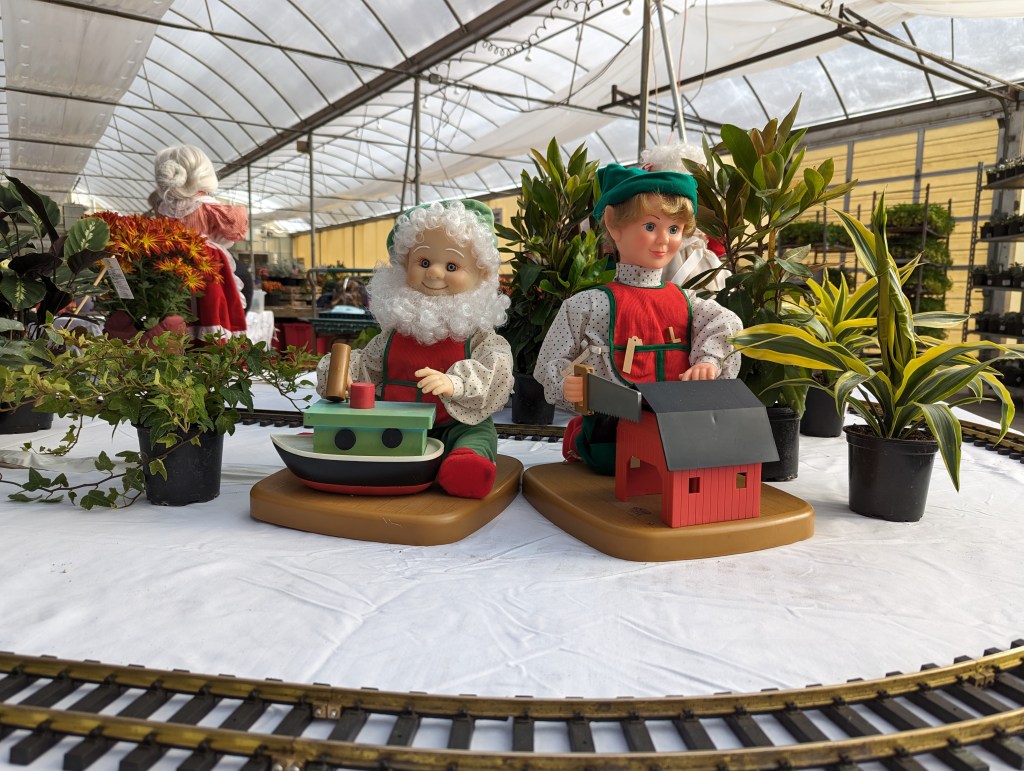
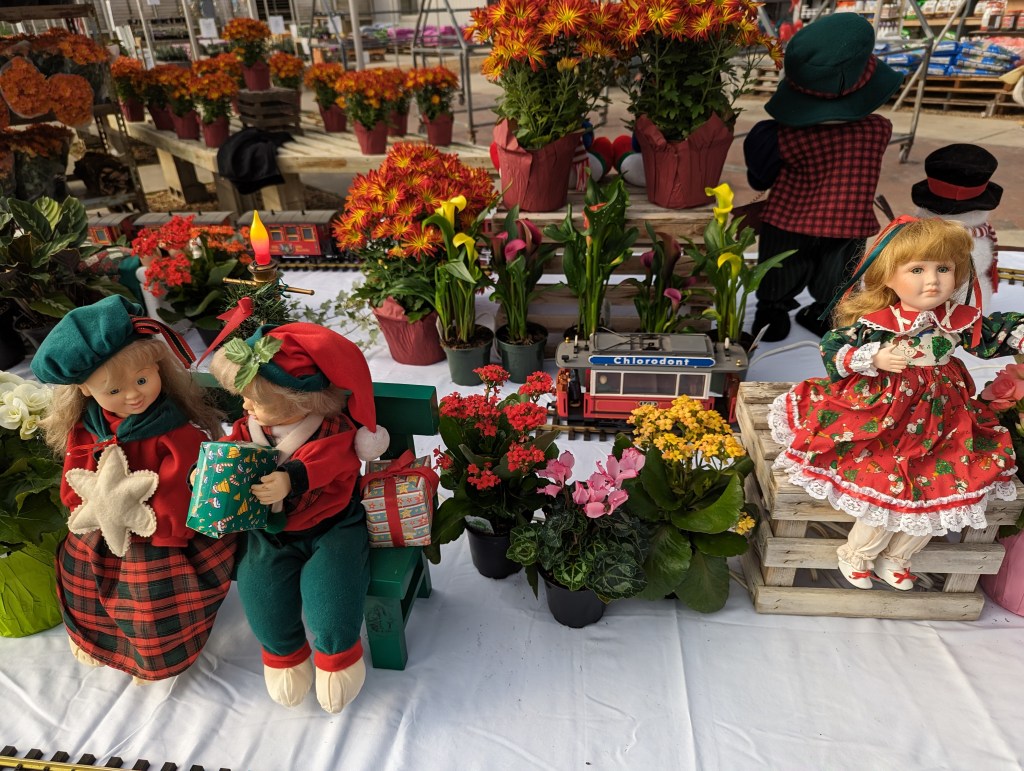
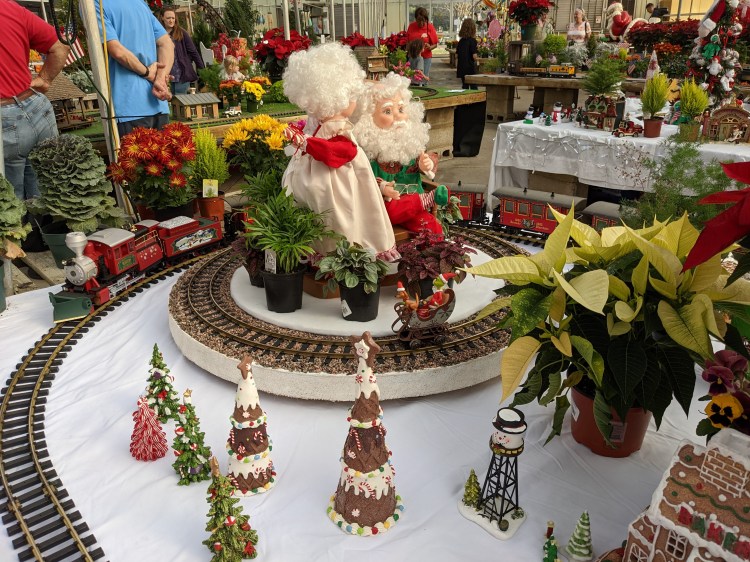
While we have used one or two, here and there, this was our first attempt at using all of our animated Christmas figures. Most of them are around thirty years old so, while not antiques, they are certainly vintage
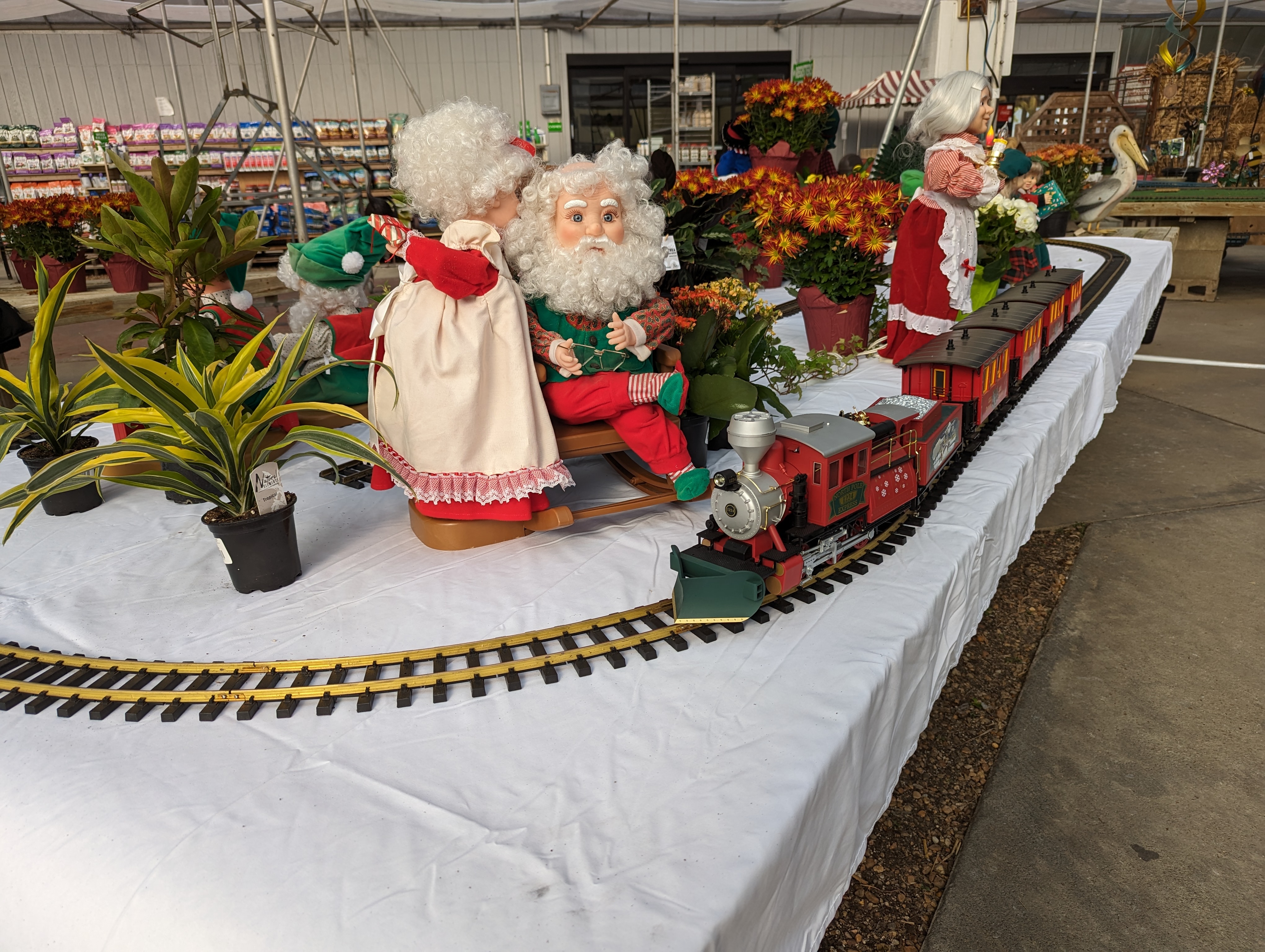
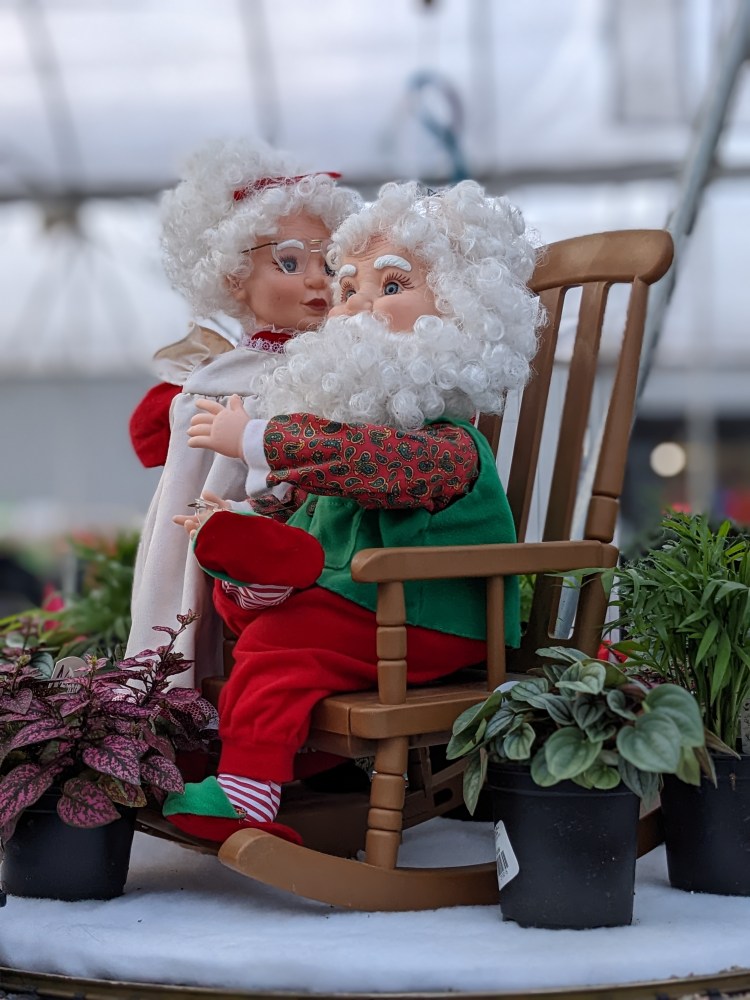
Before next year Mrs. Claus is going to need some “neck surgery”. Occasionally while bending over to kiss Santa she’ll bop the big guy on his noggin pretty hard. Being so old there is probably a joint that is worn out and I will have to try and cut her clothing back so we can get to her mechanicals.
In order to fill in space and add even more motion to our layout we ran a point-to-point trolley down the center of it. We use an LGB back and forth controller and trolley on a ten foot length of track. It generally does not give us any problems though sometimes the car we try to run with it does. When we were testing our setup we were trying to use a Bachmann trolley on it that just would not stop at the end of the track. The LGB control unit uses diodes on the track to make the trolley stop, in theory with DC power the car should not be getting any juice once it goes past the diode until the controller changes the polarity of the power and the car goes the other direction. We could not figure it out so we switched over to an LGB trolley and it worked fine.
Next year we will likely elevate the track to give better visibility, plus it will give us some way to hide the multitude of cords that animated characters entail.
This was a fun layout for us. With maybe a couple of additions and some details added around the characters this may become our standard Christmas layout. While it is bulky there aren’t that many items for us to deal with and no small bits that need to be individually unpacked and repacked.
We will also need to find a second holiday train. This one train, a Piko camelback, probably more runtime on it than any other locomotive we have. We run trains frequently, both at home an at other shows, but we can rotate between all of the ones we have. It has been a very reliable engine and has a nice soundcard in it, we would have no problem getting a second Piko engine for holiday shows.
Another Spring, another show at White’s Nursery in Chesapeake, VA.
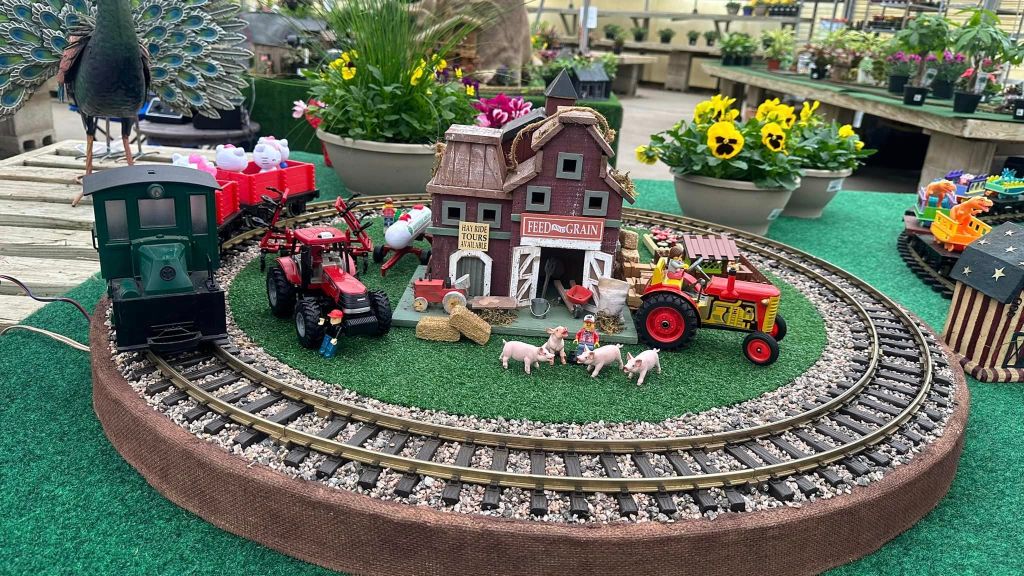
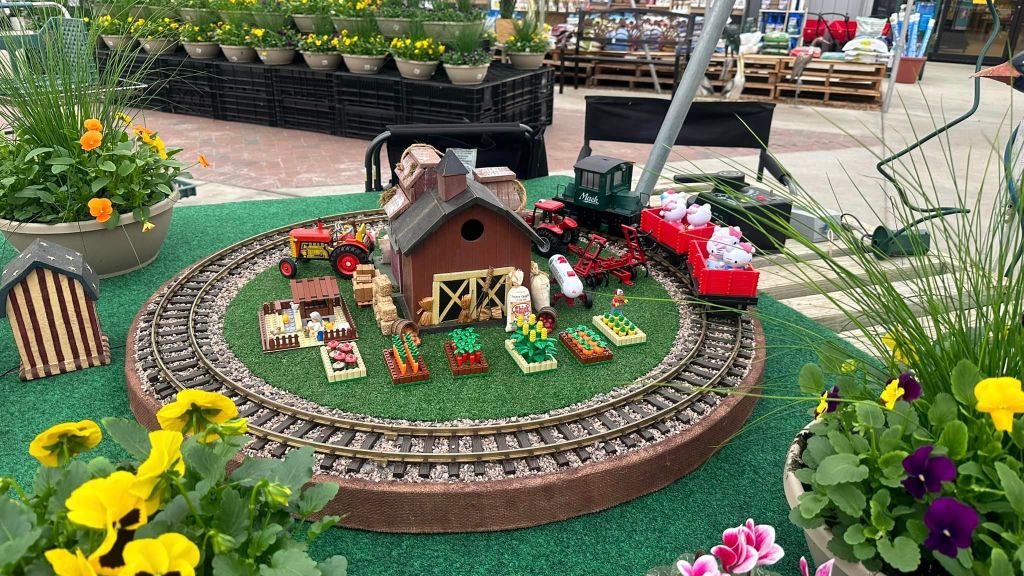
Continuing our micro layouts we went with a farming scene this time. We do not have an actual farm train, so the Hello Kitty cars were asked to participate.
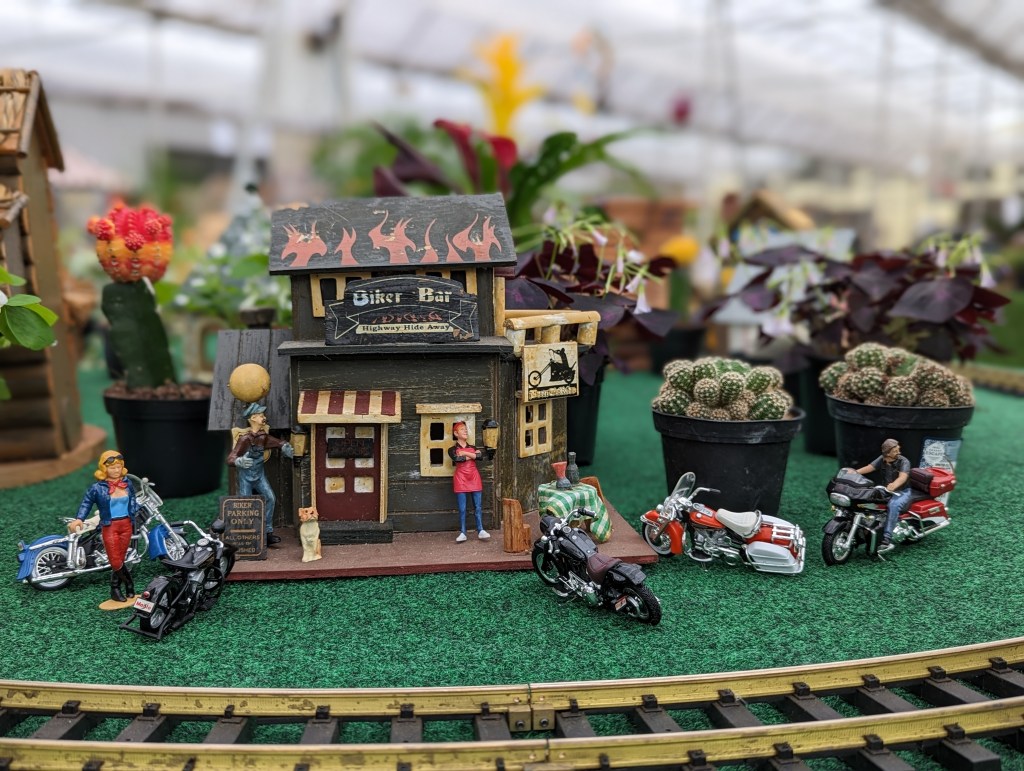
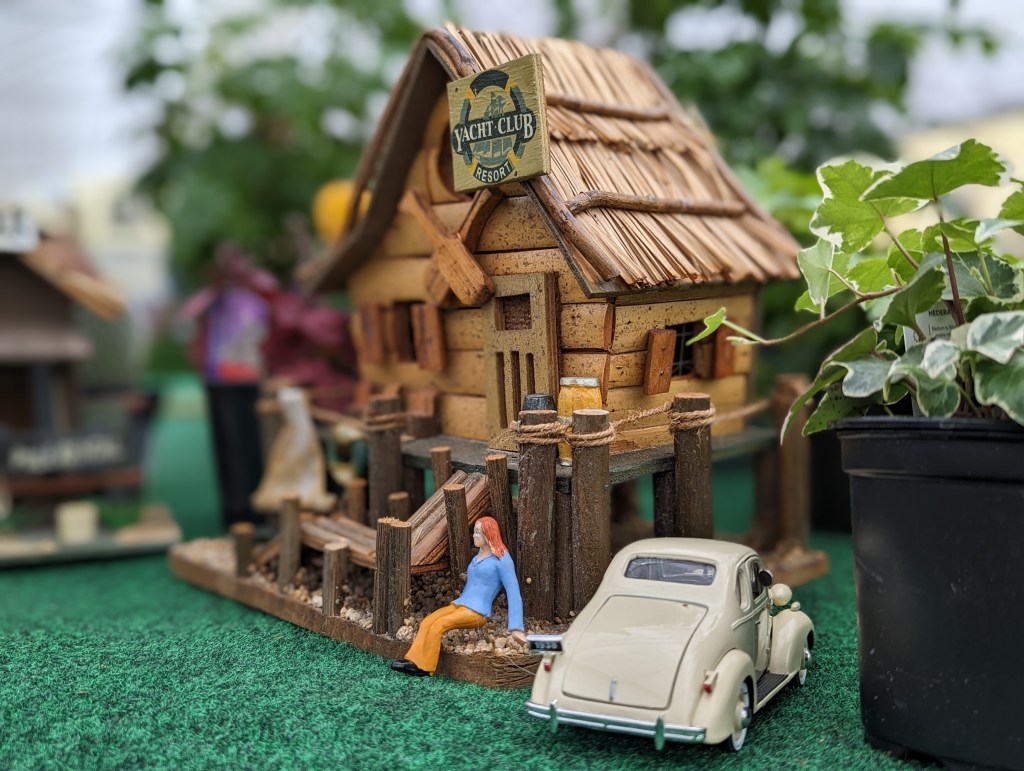
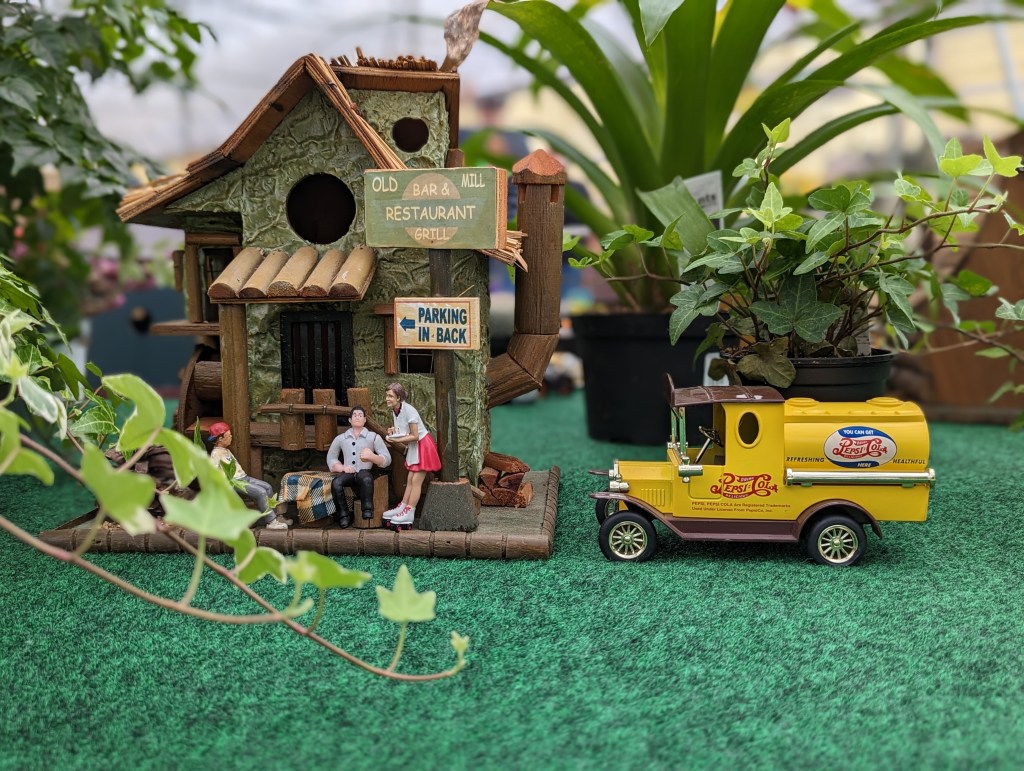
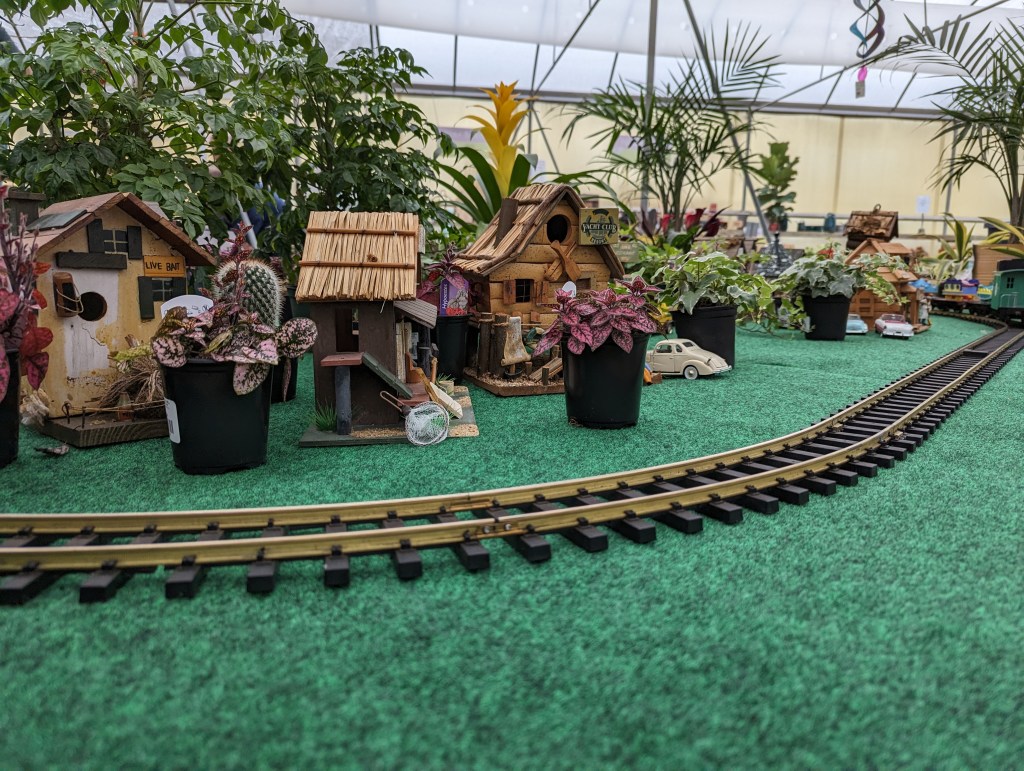
We went back to our old standbys this time – birdhouses. They are a good size for the smaller layouts used at White’s Nursery and we have quite a few of them. What we do NOT have is a lot of the smaller detail items needed to fill out dioramas with them, we’re working on that. Two of the houses we have are a feed and grain store and a barn so we added some Lego characters, a knock-off garden and chicken coop plus some smaller scale farm implements.
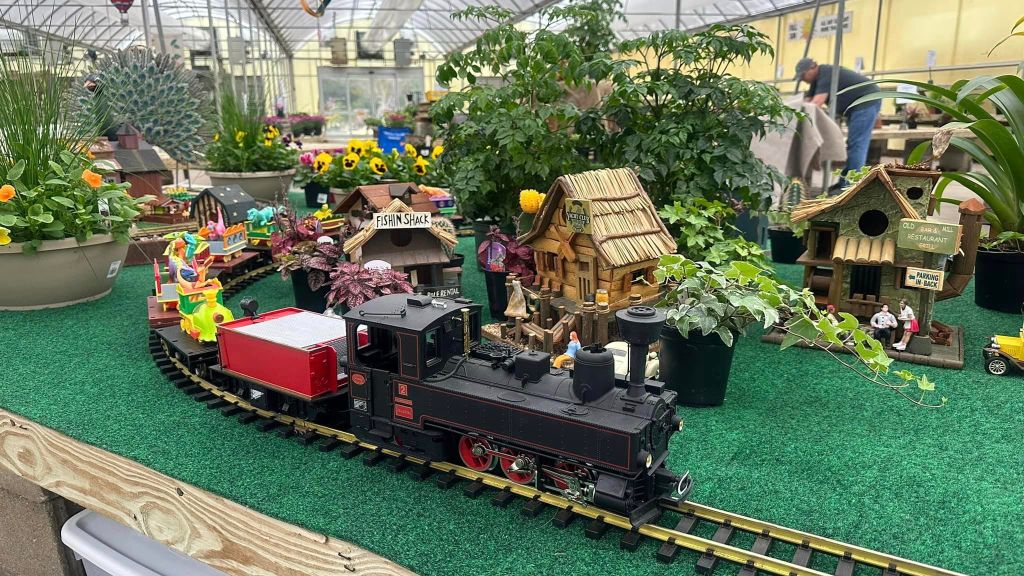
We are slowly filling in the empty spaces around our collection of birdhouses, but it really is a slow process. Thankfully at White’s there are plenty of plants that they are more than happy for us to use.
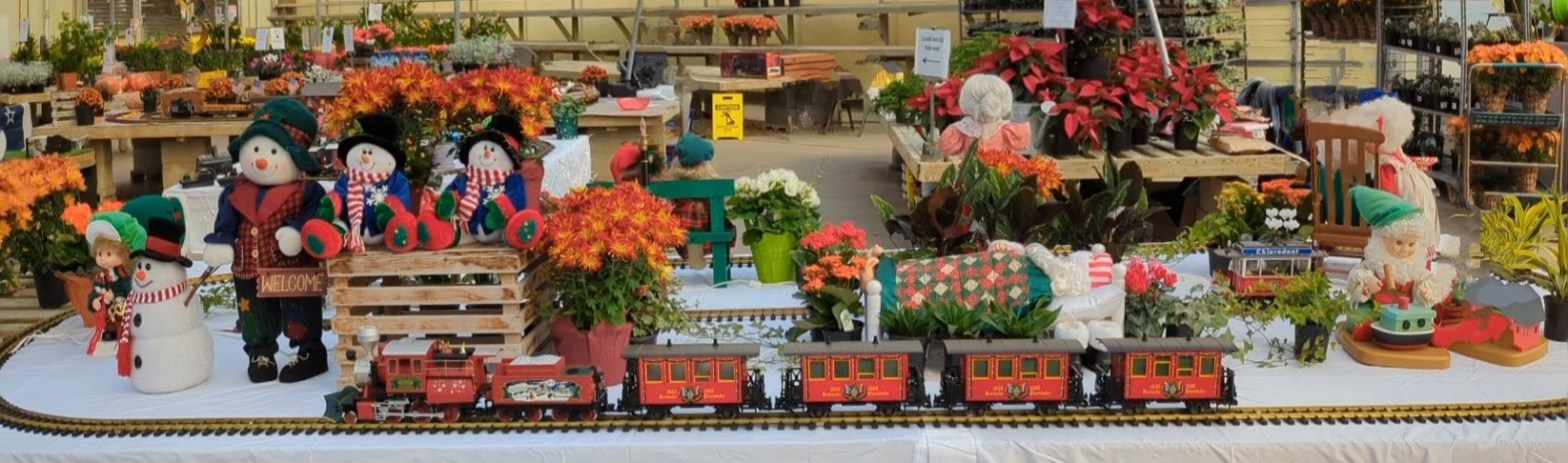
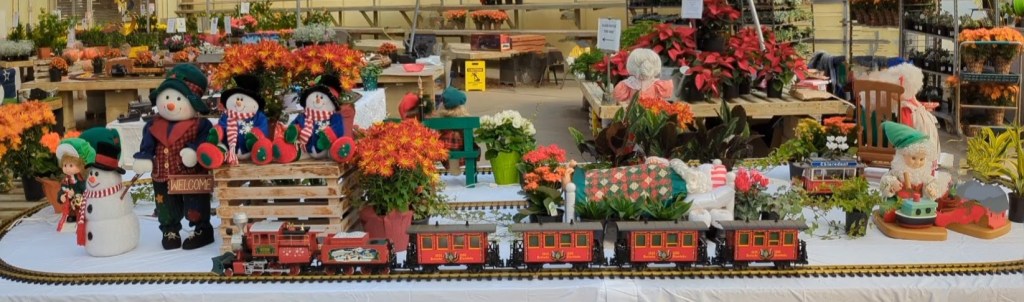
Another year, another two shows done at White’s Nursery. This one was our “Christmas” show typically done in early November just as they are clearing out the Halloween decor and gearing up for the holidays.
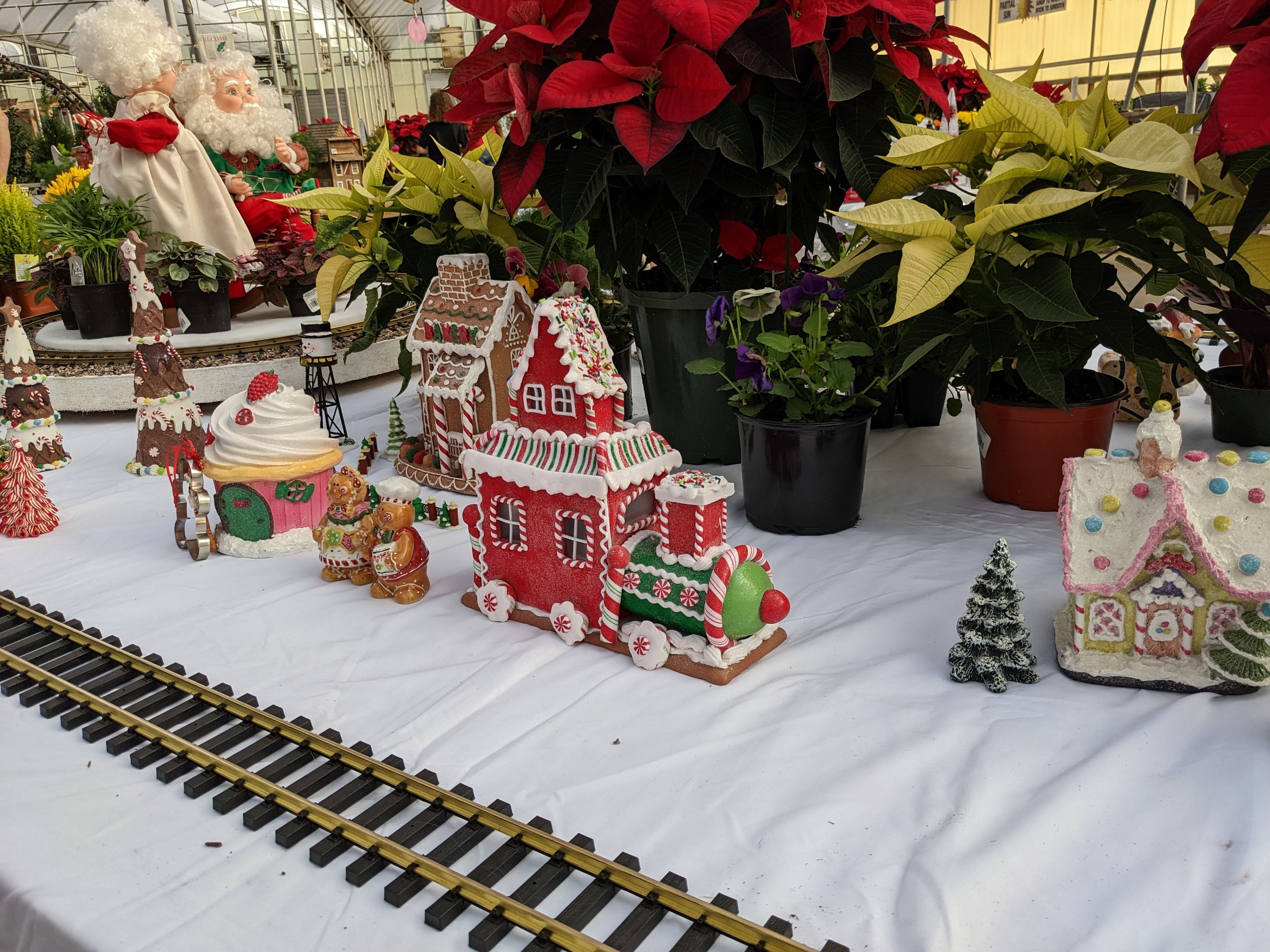
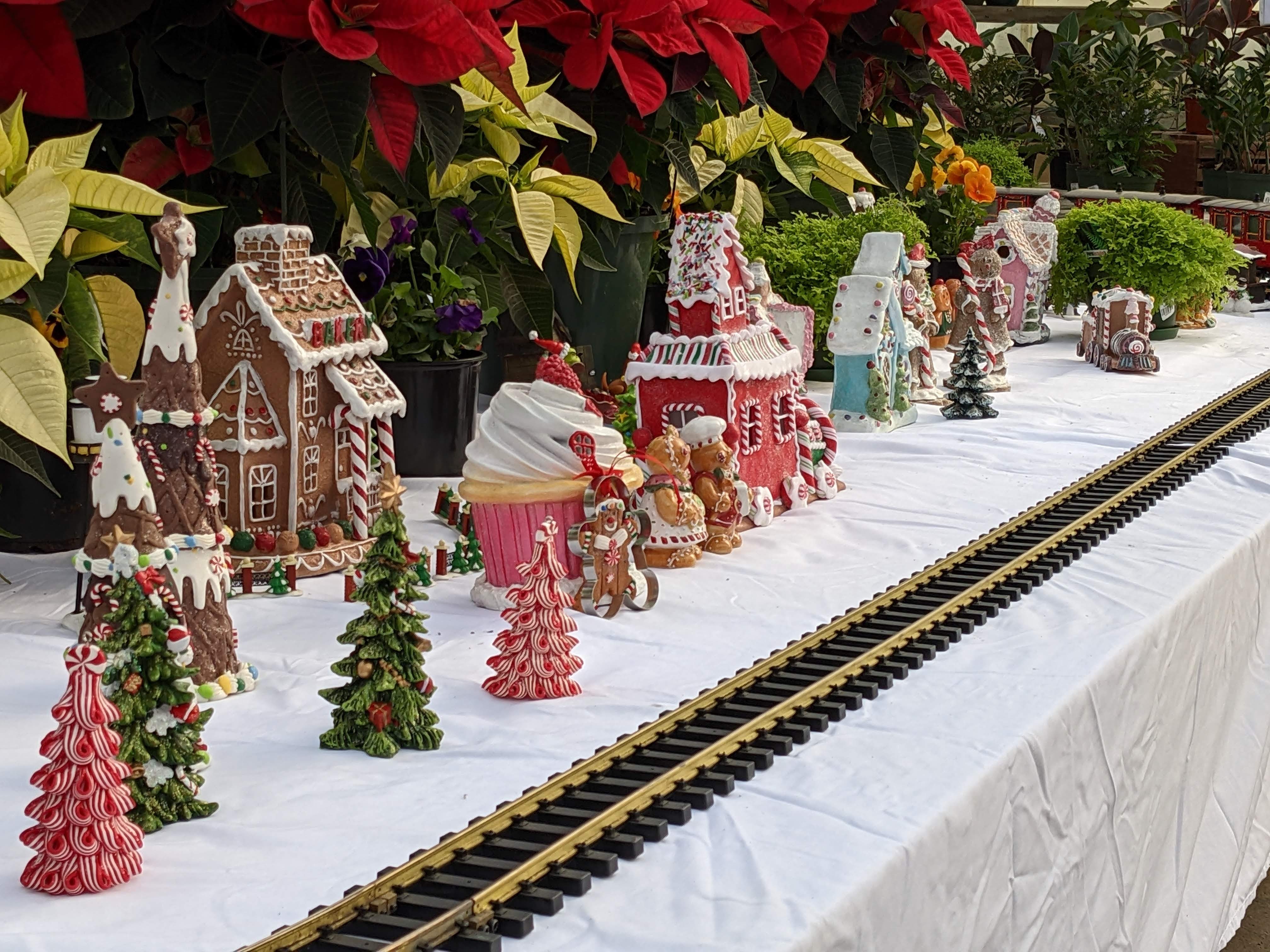
Our fall shows seem to always involve our hodge-podge collection of gingerbread houses, people and candy trees. They do look Christmasy, but I’d like to come up with a new holiday theme.
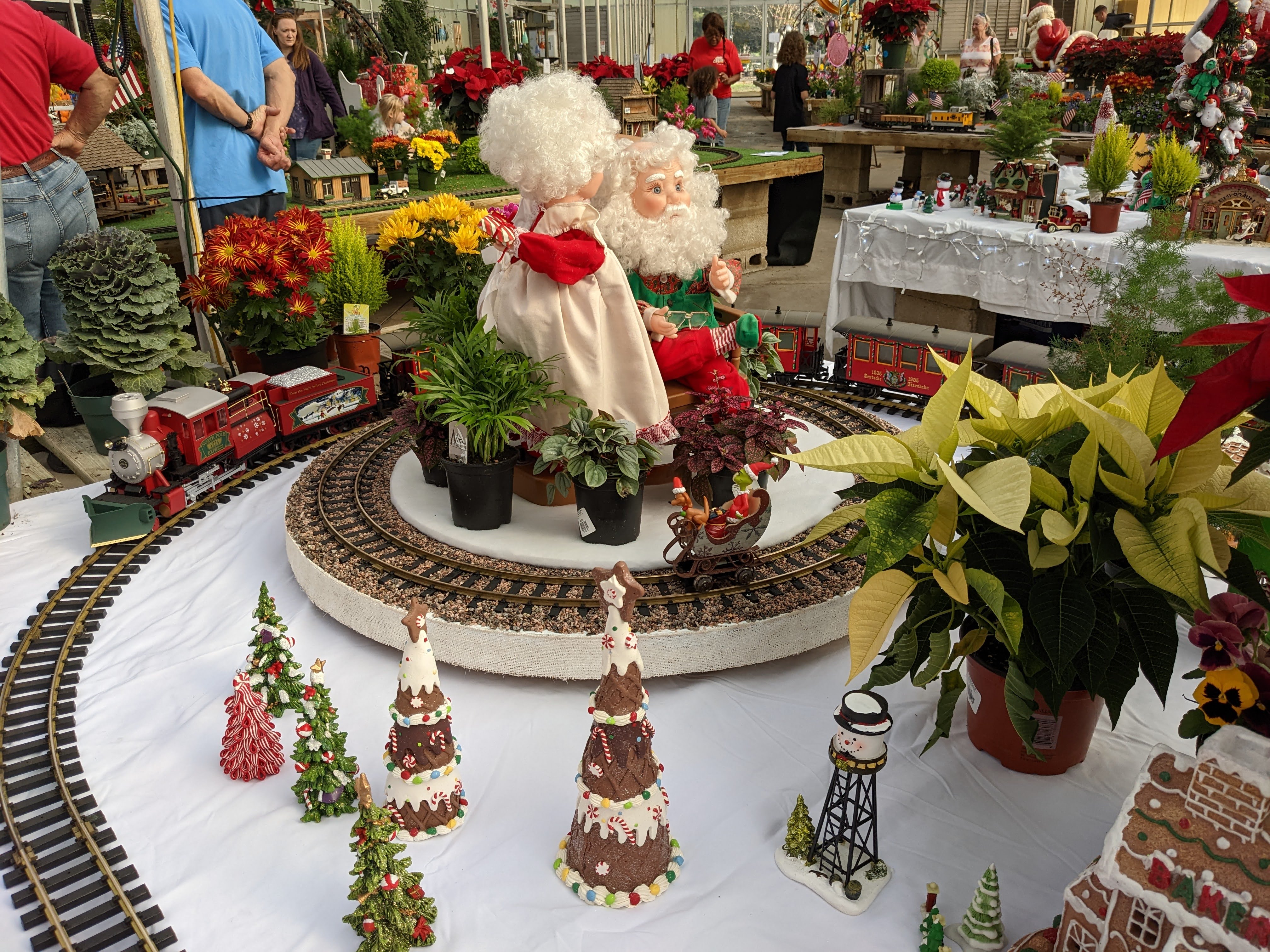
Our mini-layout featured an animatronic Mr. and Mrs. Claus. Those who have been in the Hampton Roads area for a while may remember Christmas at Coleman’s Nursery. We’ll never be able to duplicate that, but we like to add some movement to our displays when we can.
They were supposed to be circled by the Grinch and his dog Max on a sleigh, a little thrown together motorized draisine that worked admirably during an eight day show a couple of years ago.
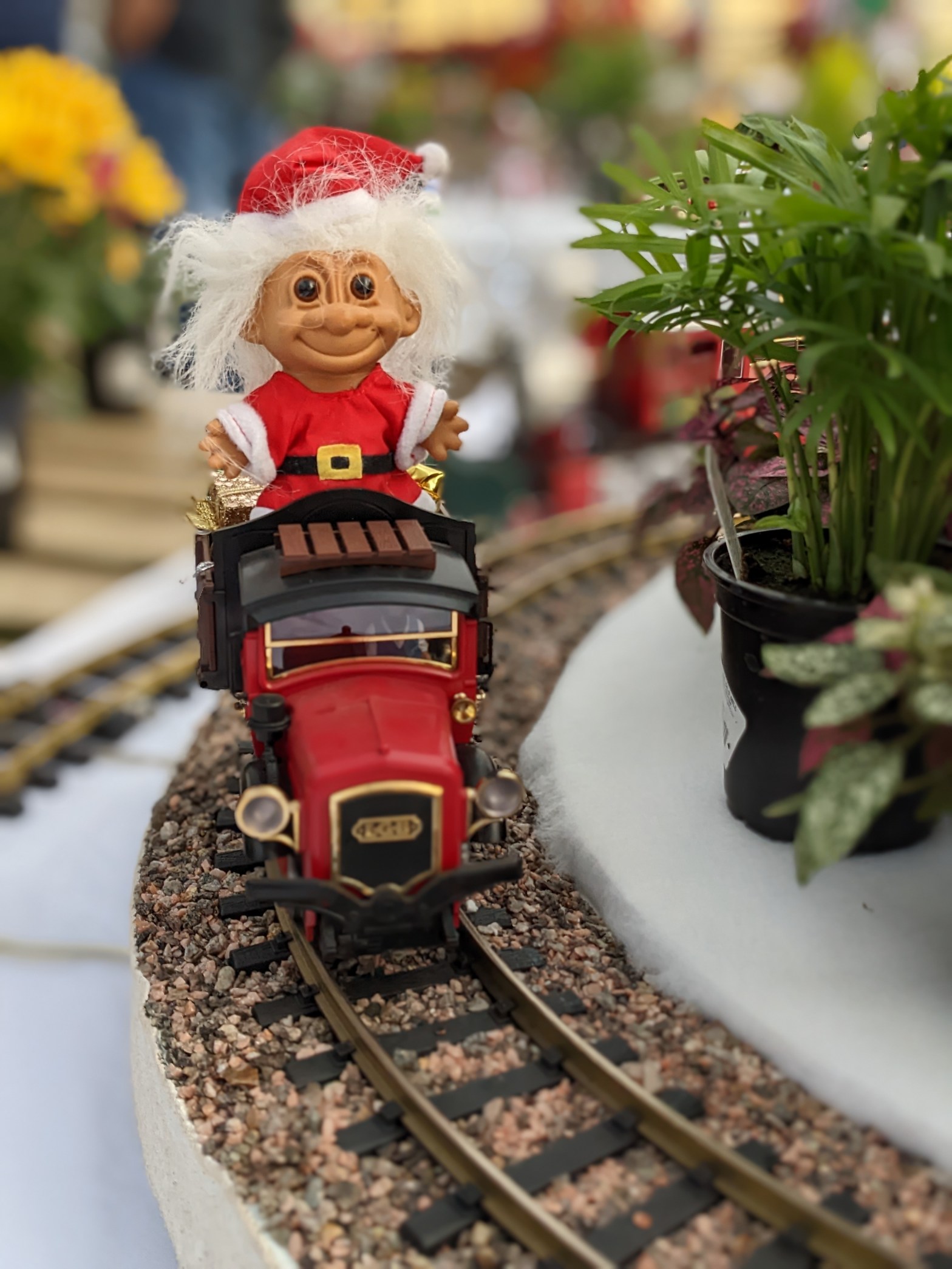
This year, however, it was a no-go for the Grinch (refused to run) and he was replaced by the troll in a truck.
The Santa Troll in the back of an LGB rail truck worked really well. So well that, not wanting to delegate the role permanently to our only rail truck I looked around and found a Delton model that will do the job. The mini tracks are only 32-36″ diameter circles to we’re always looking for short wheelbase vehicles to won’t have a coniption going around such a small track.
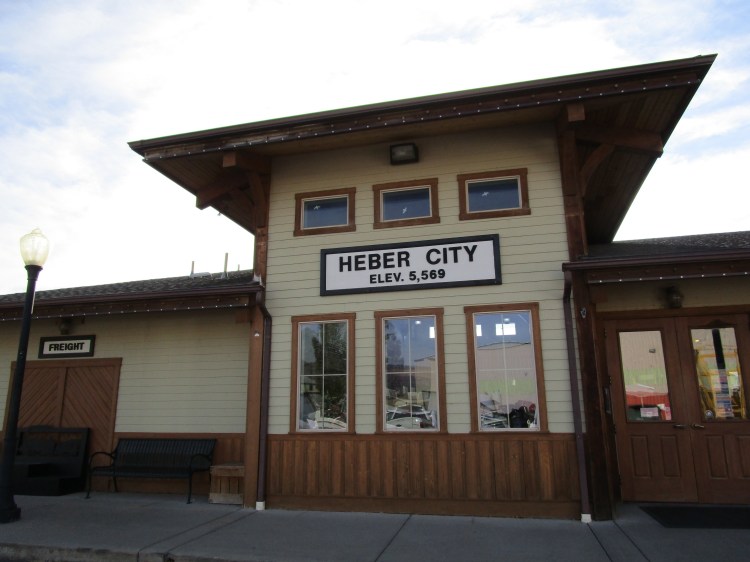
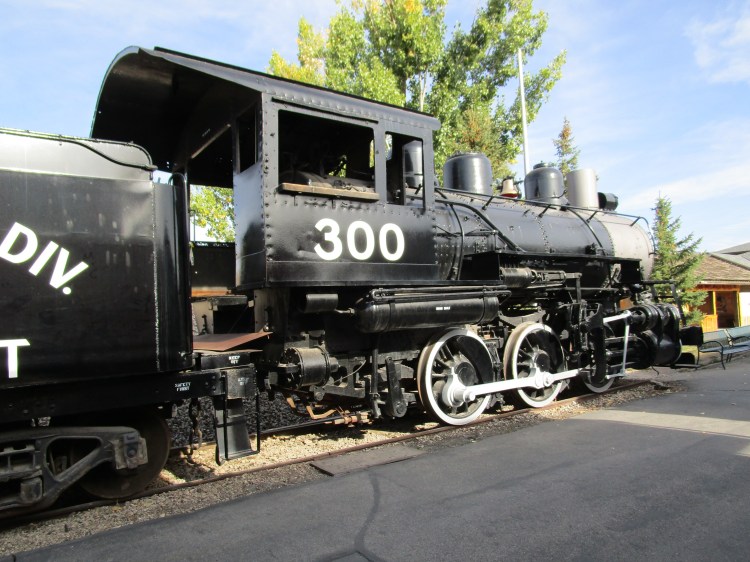
This fall during a trip out west to visit family we had the opportunity to visit the Heber Valley Railroad in Utah’s Provo Valley. Originally completed in 1899 as a part of the Rio Grande Western the branch line was in service hauling freight until 1966.
The 1970’s and 80’s saw the railroad operating as a private heritage line however in 1990 the railroad would go into bankruptcy. In 1992 the Utah State Legislature voted to purchase the railroad and all of its assets and trains began running again in 1993.
During the 2002 Winter Olympics the railroad served as transportation, bringing visitors from the depot in Heber City to a station at Soldier Valley where passengers transferred to horse drawn sleighs and continued to the venues for the biathlon and cross country skiing.
Soldier Valley StationThe Teak Barn
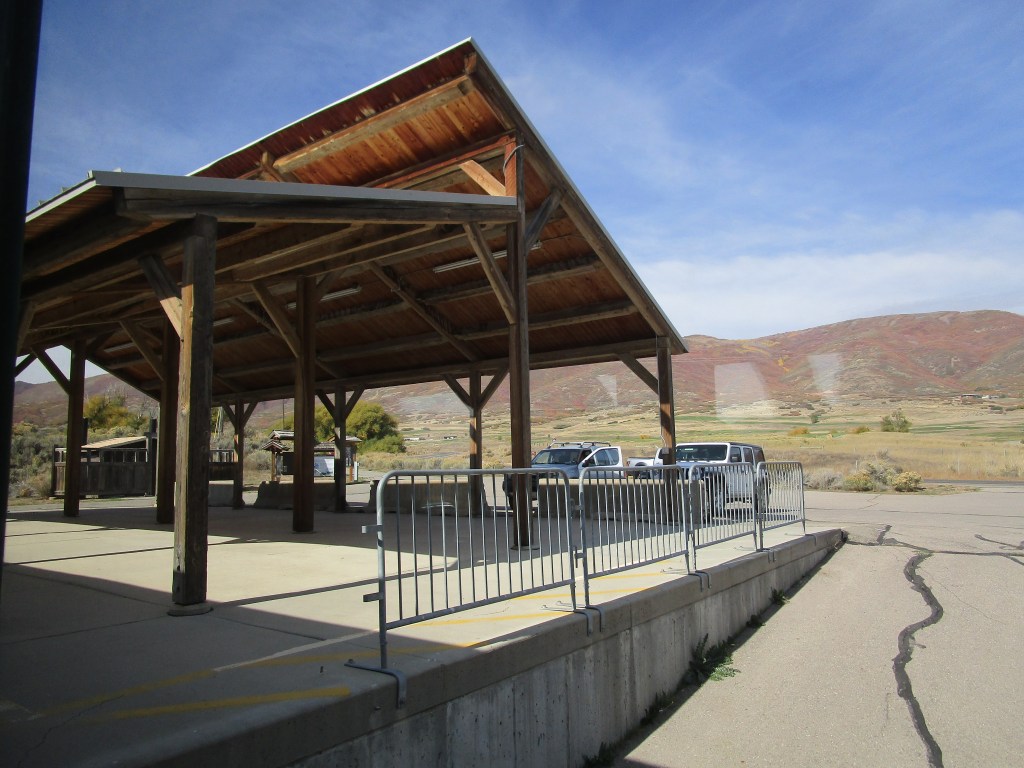
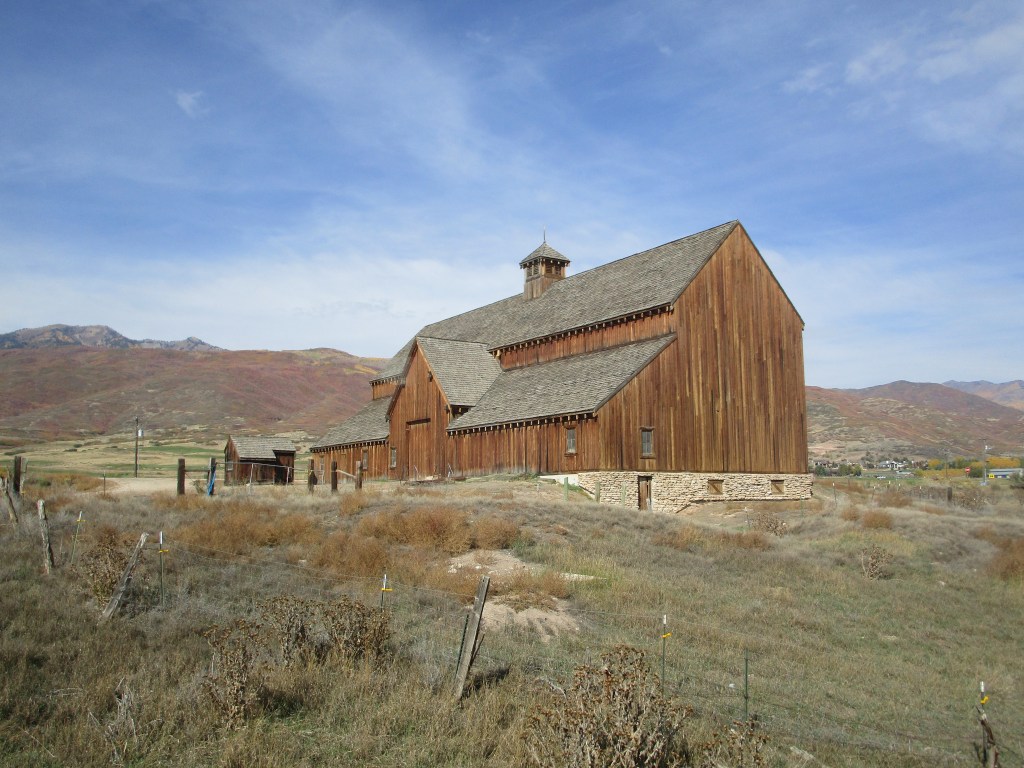
The Soldier Valley station was built specifically for the Olympics and along the way there was also what was called the “Teak Barn” which had been fallen down but was reconstructed just so the Olympic visitors would have something to see on their ride.
The pride of the Heber Valley Railroad is the ex-Union Pacific 618, a class “C-57” 2-8-0 “Consolidation” type steam locomotive. The engine had been on static display at the Utah State Fairgrounds; it was transferred to the Promontory Chapter of the National Railway Historical Society, restored and placed back in service. In 2010 the boiler permit expired and the 618 was placed back on static display. In 2014 it was moved into the shops for overhaul and conversion from coal to oil burning.
Unfortunately during our visit the 618 was not running, it is currently awaiting a boiler inspection. Nor was the Great Western No. 75, another 2-8-0 which is in storage awaiting repairs.
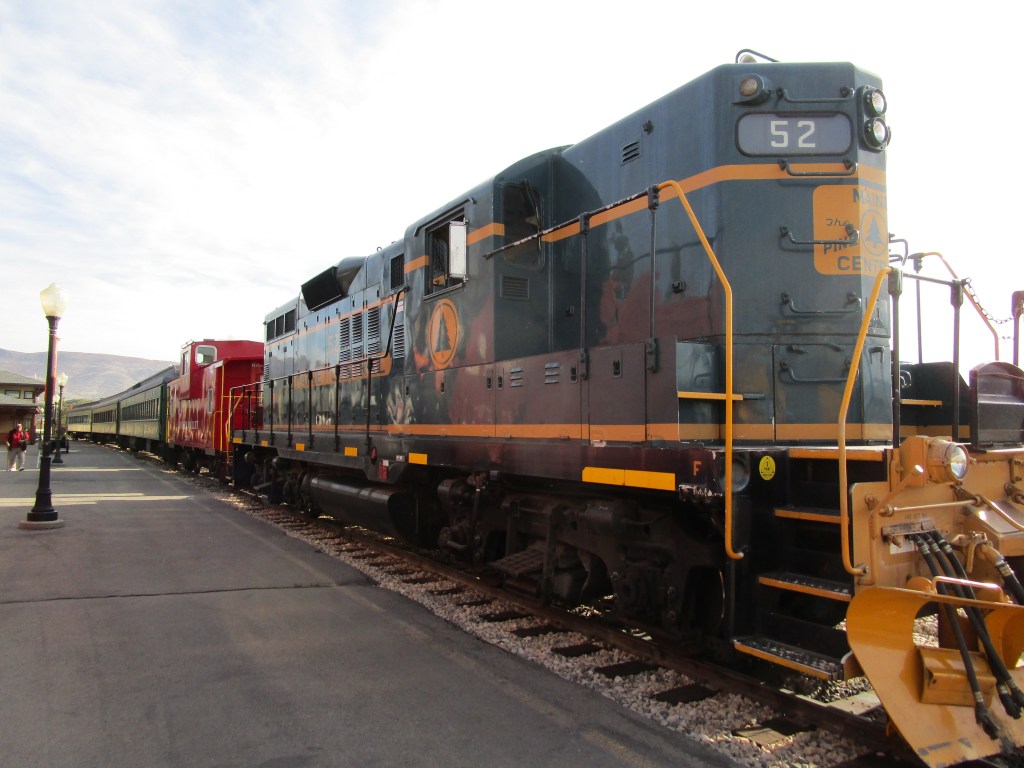
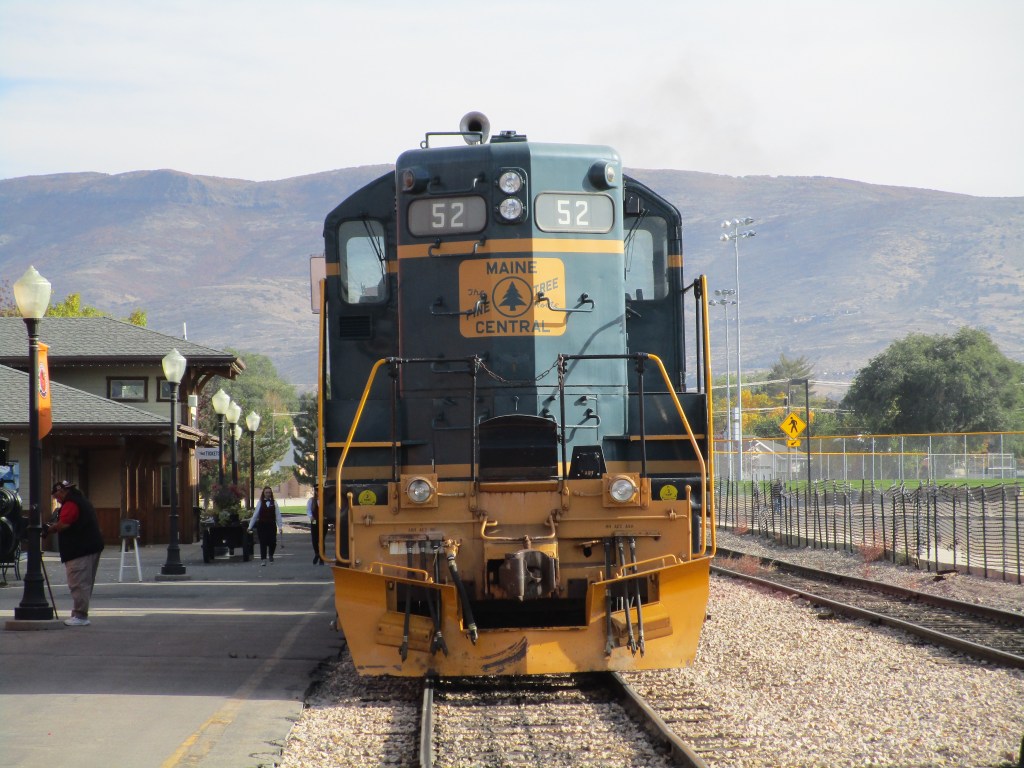
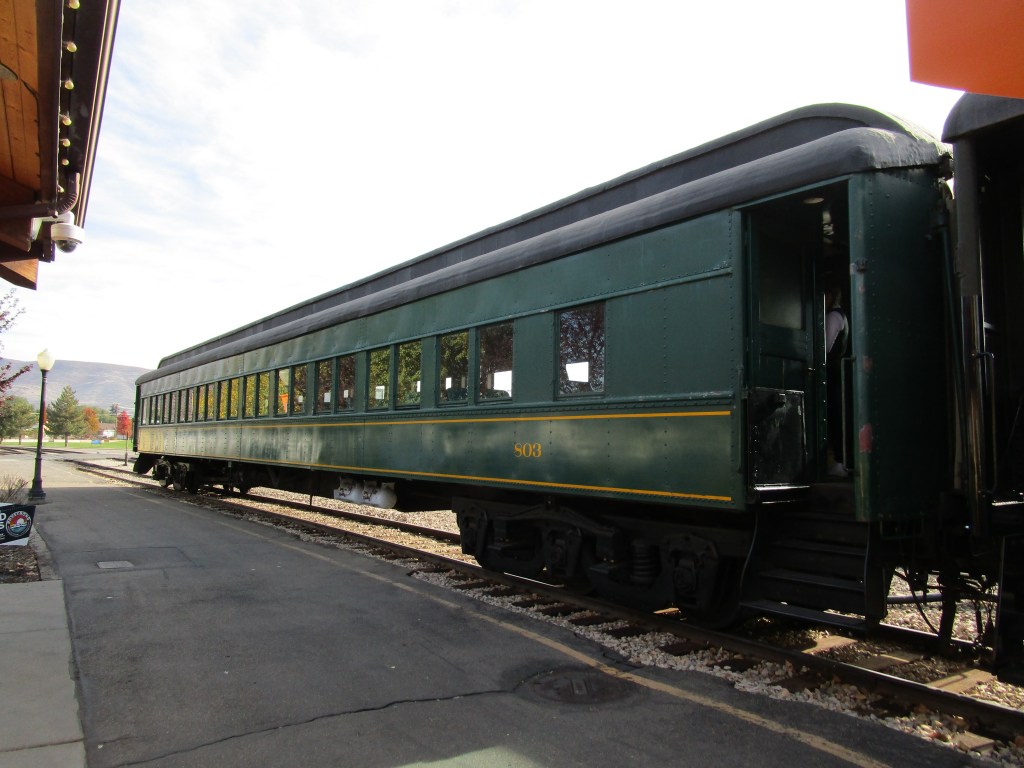
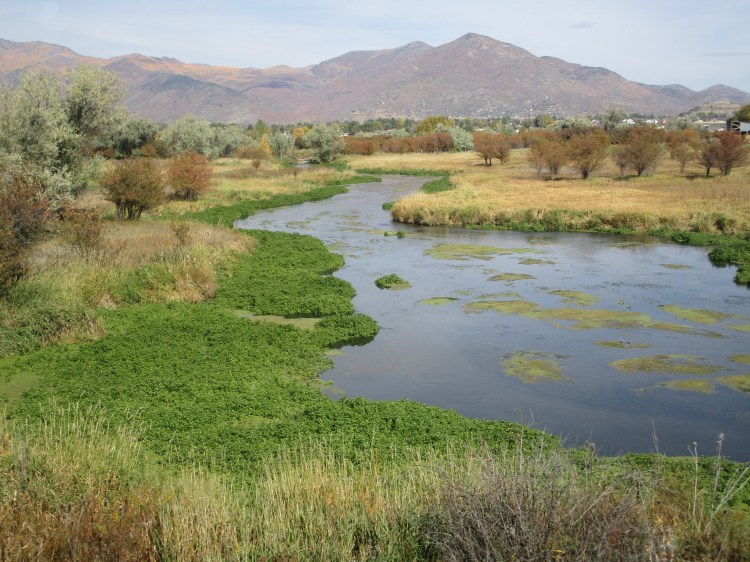
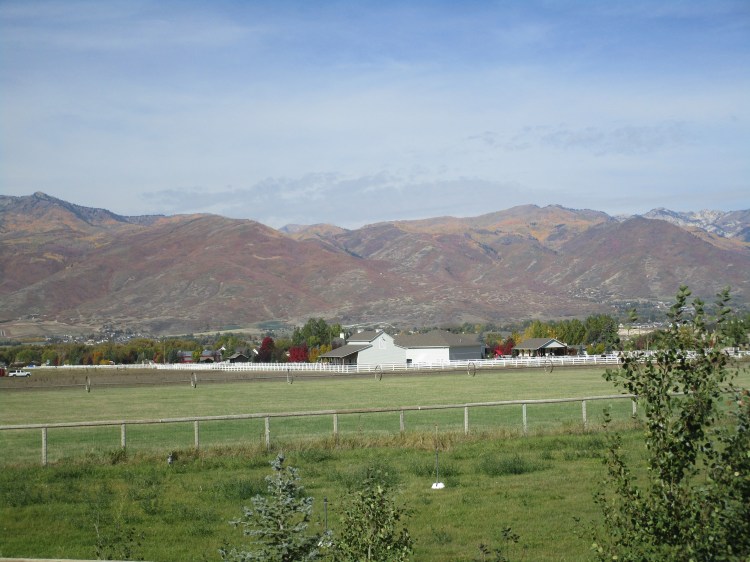
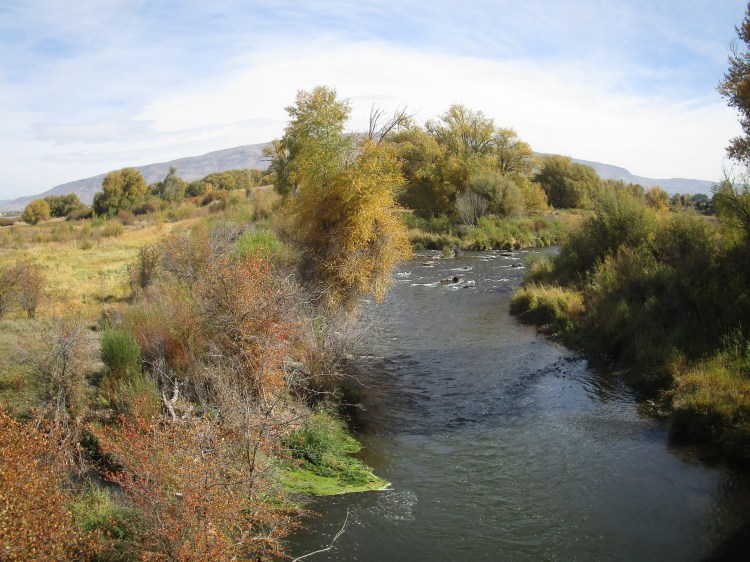
We took a ride on the Lakeside Limited route in a restored 1920’s heavyweight passenger car with the four car train being pulled by a GP-9 diesel locomotive. Once we got out of Heber City the tracks wound through the countryside along the Provo River and Deer Creek reservoir.
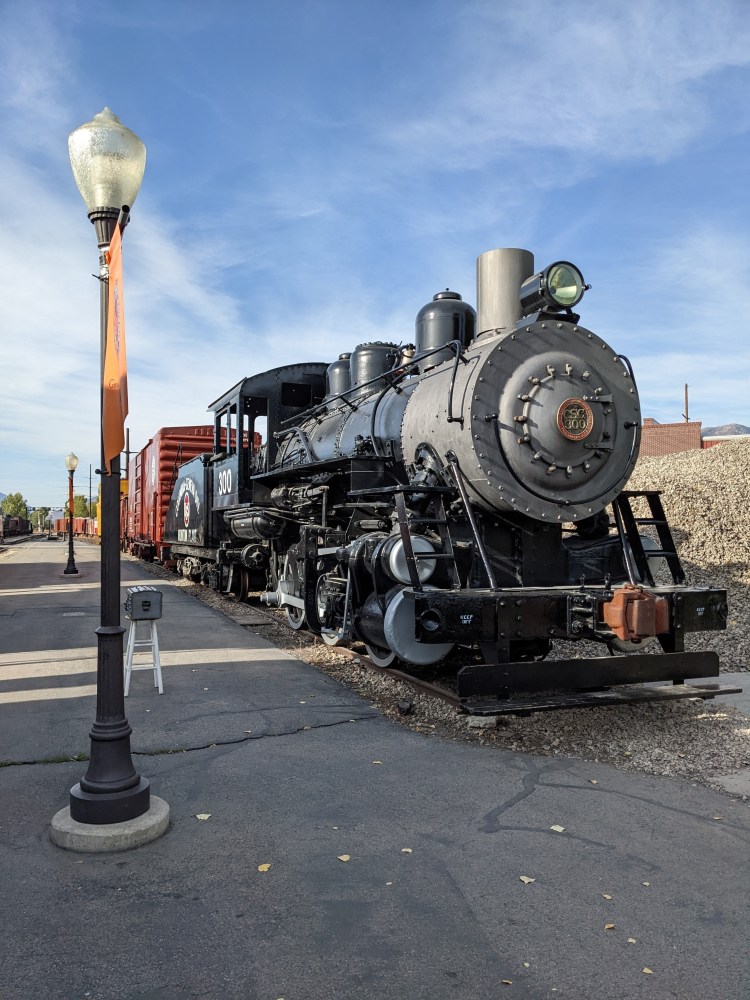
Our visit was enjoyable, we liked the 90 minute ride and the box lunches available were very good. The railroad seems to own a lot of historic rail cars and engines, but very little of it is visible to visitors. There is a small 0-6-0 steam switcher on static display and a bit of rolling stock but other than the train we rode on that was about it. The Heber Valley Railroad spends a considerable amount of their available labor and funds on maintaining and improving their right-of-way. The trip we went on will be expanded and lengthened by 30 minutes next year (2023).
Accessibility for wheelchairs and electric mobility devices was not good. Due to the historic nature of the passenger cars neither can be brought aboard the trains.
Potager – A kitchen garden where vegetables, flowers, herbs and fruit intermingle. With trains.
Farmer Archie and Miss Sophie survey their melon patch
A Garden train with a lot of plantings involved is a fair amount of work to keep up with. Any grass you have growing is always trying to take over the whole world, annuals have to be replanted – annually and there is just a lot of pruning, trimming and cleaning up to be done. So this year we decided that for all of our work our garden train needed to be rewarding us a little more than it had been.
This year we have four different varieties of peppers dispersed throughout the garden in containers and several different spots are being cleaned out for our fall/winter garden.
We had grapevines planted and while the plants themselves grew well it turned out that they were a variety that didn’t really care for hot and humid North Carolina summers, meaning that for all of their showiness we didn’t get to eat grapes. So the grape vines came out and early this year I planted snow peas. Critters ate ’em. I followed up with bush beans. Critters ate them – again. Next came pole beans. They survived the local wildlife, but the soil in that bed is not the best as grapes like to be tortured a bit with their growing conditions. So the beans are still there but they are not exactly thriving.
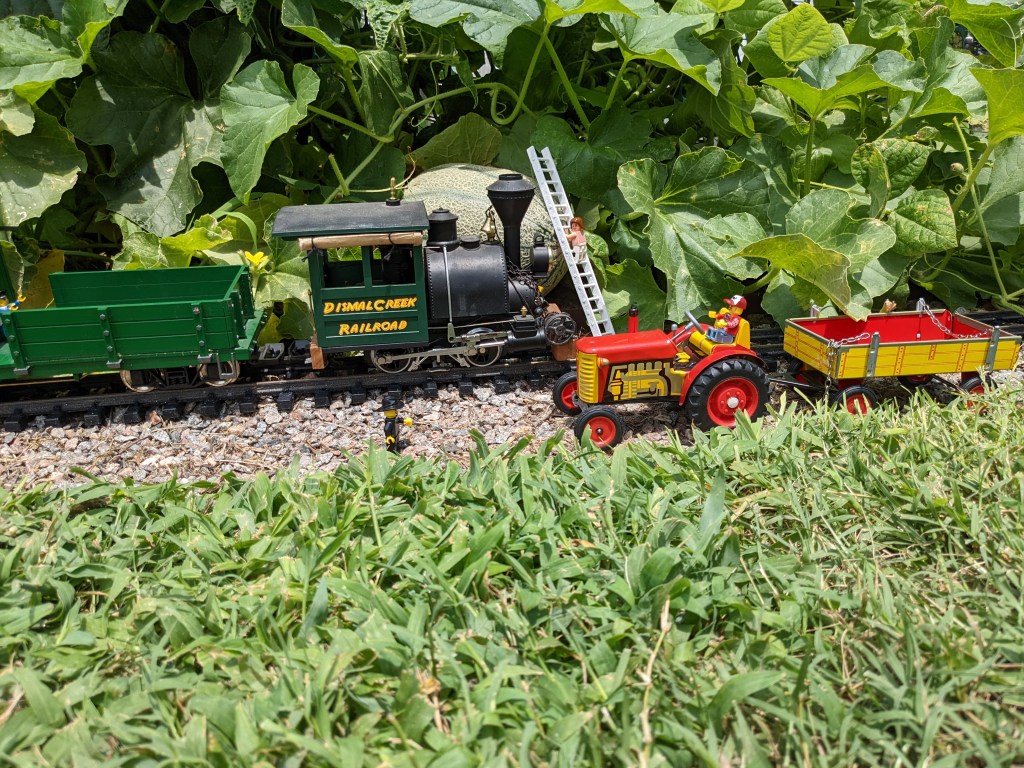
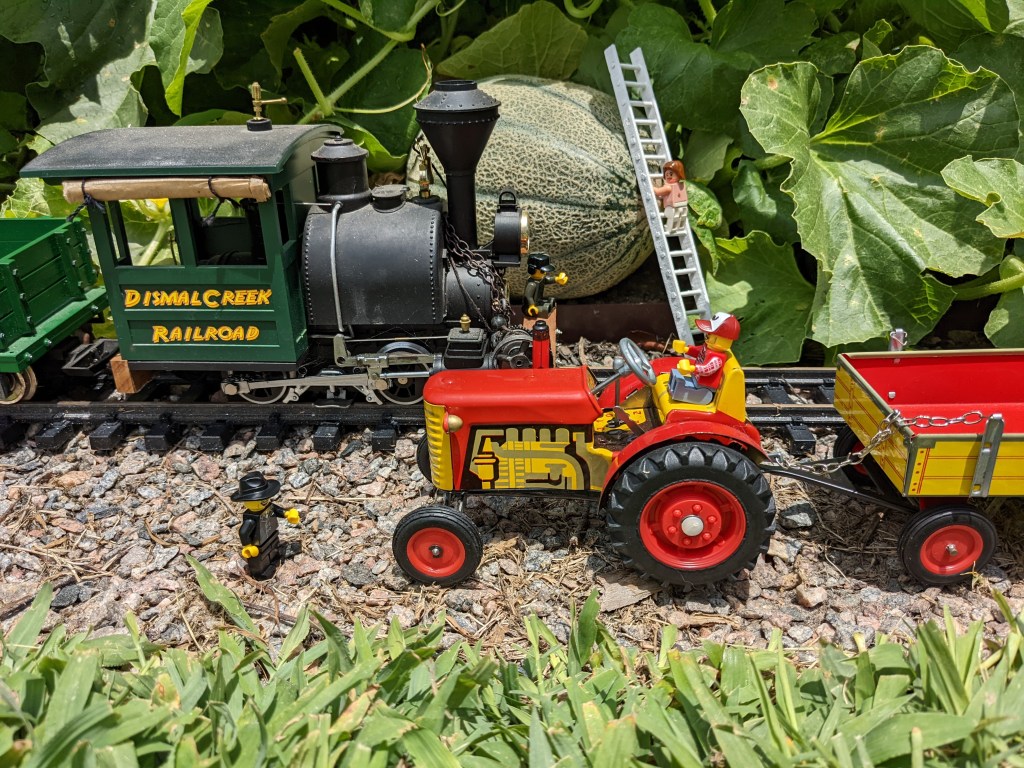
Shortly after we noticed something else coming up. It looked a lot like a squash plant, or possibly cucumber or a melon of some sort. Now we very rarely plant squash as the Engineer does not care for them. Neither of us are fond of cucumber, though we have on occasion put up some pickles. And it has been a long time since we planted melons. And none of those, or anything else edible, has ever been planted in the area where our trains are. Yet here it is.
A record breaking melon, but how are we going to get it to the county fair?
Now we have a very productive cantaloupe patch growing in a very narrow area between a couple of parallel train tracks.
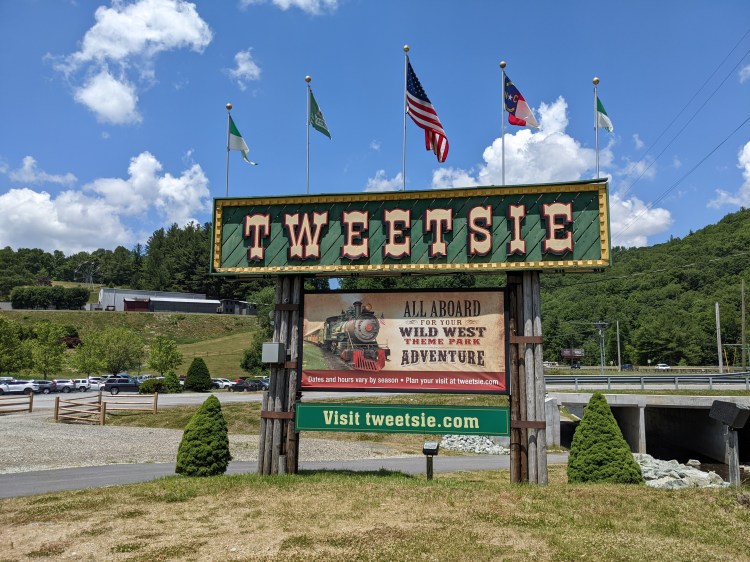
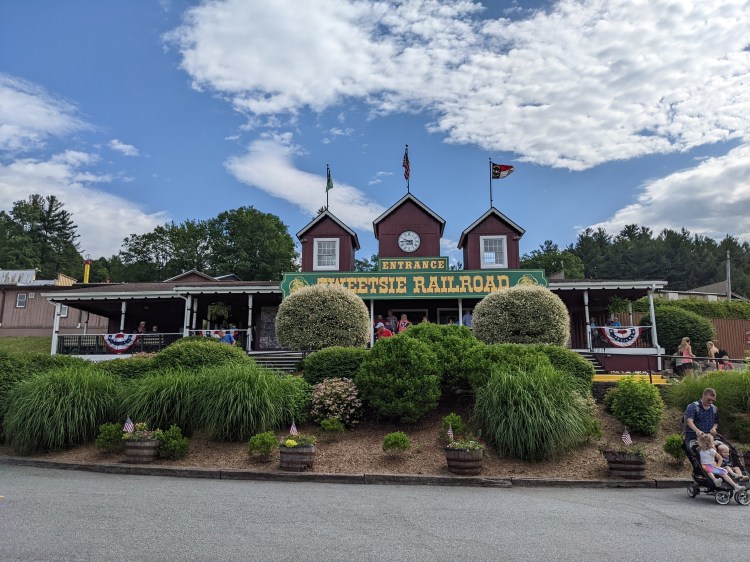
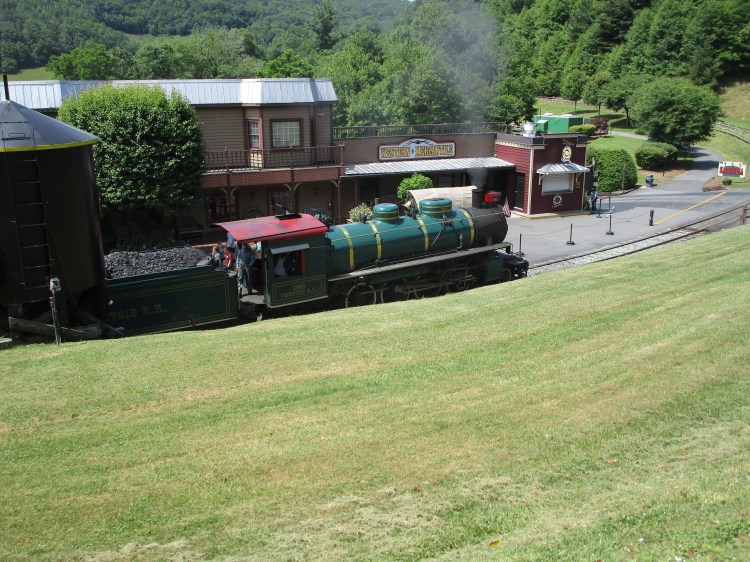
Summer vacation this year included a trip to the Tweetsie Railroad theme park near Blowing Rock, North Carolina. It was a return visit for the Conductor and a new experience for our Engineer. I would love to say that it was exactly as I remembered it, but as my first time there was 1958 or ’59 I really do not recall much of it. So call it new for both of us. The Blowing Rock/Boone region of NC is gorgeous and we spent quite a bit of time on the Blue Ridge Parkway.
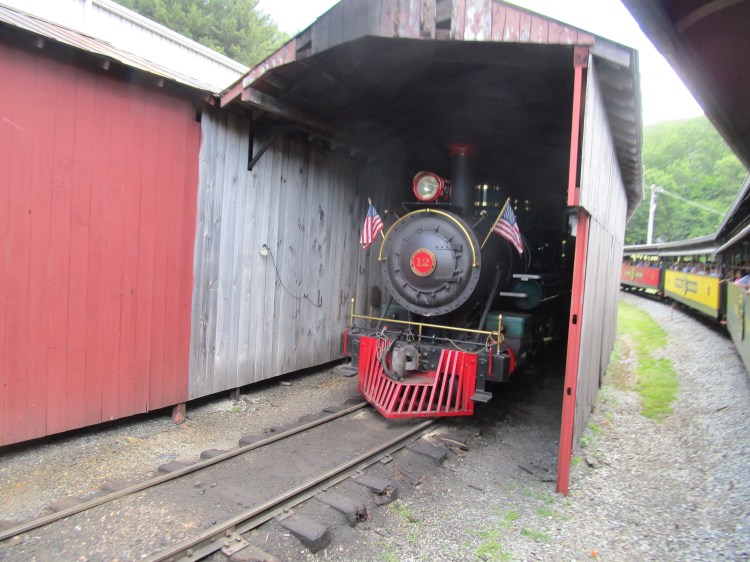
The Tweetsie Railroad opened in 1957 as a one-mile excursion train ride behind the East Tennessee and Western North Carolina Railroad (ET&WNC) #12 narrow gauge 4-6-0 coal-fired locomotive.
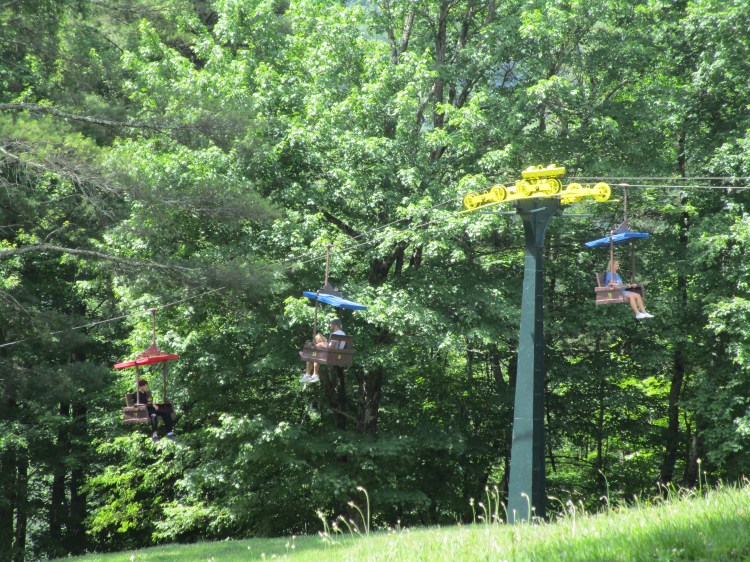
In 1958 the tracks were expanded into a three mile loop around the mountain. In 1961 a chair lift up the mountain and amusement park rides were added. #12 is well known to G-scale garden train enthusiasts as the prototype for Bachmann Train’s Big Hauler engine.
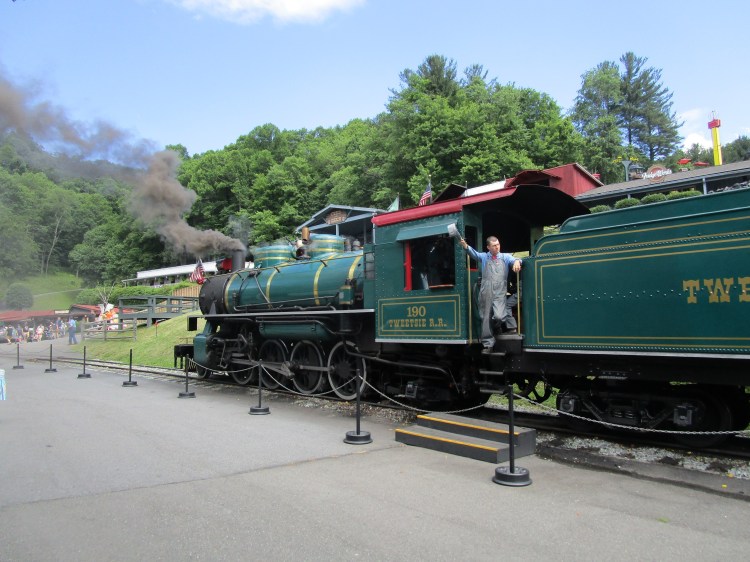
On the day we visited the “Yukon Queen”, a 2-8-2 from Alaska’s White Pass and Yukon railroad was in operation. Built in 1943 she would have originally been known as a “MacArthur” 2-8-2 but more commonly now referred to as a Mikado.
The Tweetsie RR operates its own locomotive repair shop to maintain their two historic steam engines as well as performing overhauls and providing repair parts for other heritage trains at Walt Disney World, Dollywood and Busch Gardens. The shop is not normally open to visitors, however, during railroad heritage events in the fall tours are available.
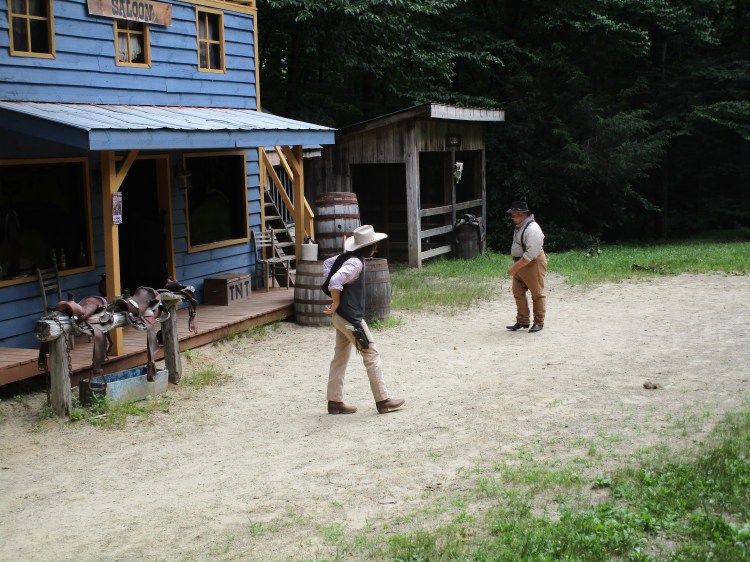
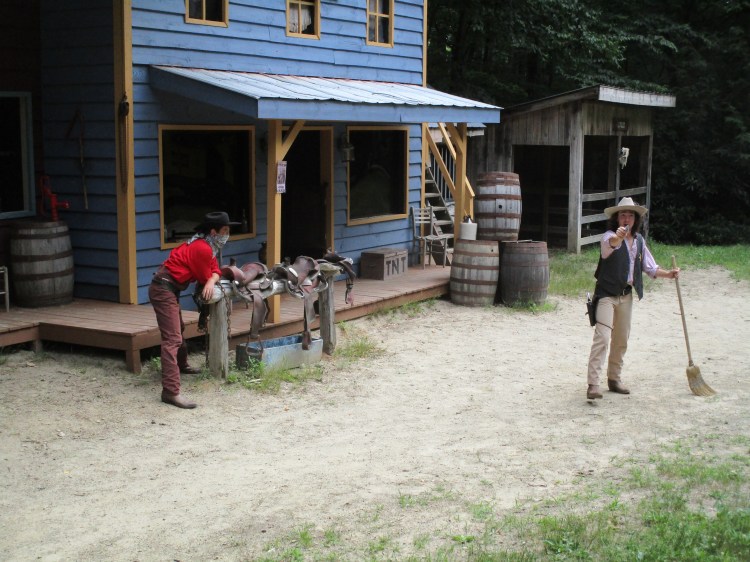
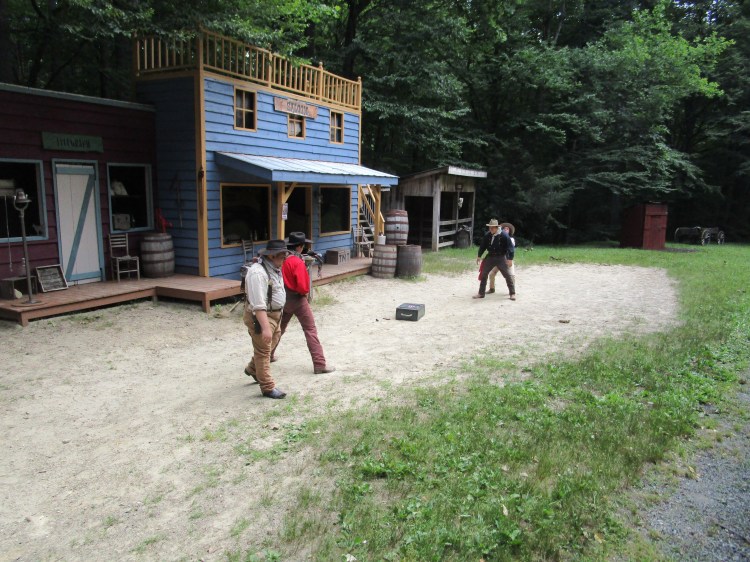
Like many small heritage railroads Tweetsie adds in a “train robbery” and at one time had a (typical for the time) cowboy-and-indian show along the train ride that has become less insensitive to Native Americans and more of a generic good guys and bandits act.
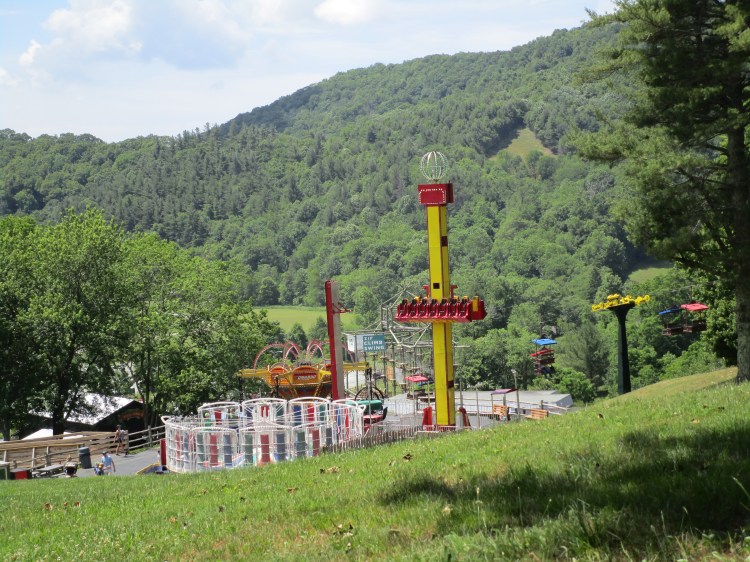
Over the years they have added numerous shows, rides and amusements. The park is built on a mountain with the main western themed area at the base, amusement rides along the side and a petting zoo, live music show and more dining at the top.
We found Tweetsie to be very accessible with our mobility scooter. We were able to easily visit all of the shops, entertainment and dining facilities. Both wheelchairs and scooters can be brought onto the train passenger cars. Neither can be used on the chairlift, but there is a shuttle that runs from the lower level of the park to the upper. There is also a paved path that leads through the woods around the park that will take you to the upper level. This trail was navigable with our scooter without any issues, due to its steepness and length it would be very difficult for a wheelchair.
At last, the season of inactivity for us is over – time for another show at White’s Nursery and Garden Center. Our train club did two shows over the winter but we elected not to participate. We enjoy doing the shows at White’s as they are a little more “free-form” and we can do our own thing without having to fit into the overall scheme of a large club layout.
In a first for us we’ve decided to start doing our layouts on a table rather than on the floor. The first couple years we did a layout we were in a separate greenhouse and really had an unlimited area to set up in. However, just as in Nature, a train layout abhors a vacuum and the more space you have available the more “stuff” you need to fill it up. Eventually the management at the nursery decided to use the spot we were in for something else and we moved into the main area where the rest of the layouts were, though still on the floor. It was nice as we were setting up in a gravel area which meant we didn’t have to worry about an underlayment and it was still larger than one of the tables.
Our Table Before……and After
We used a 5′ X 10′ loop of track and borrowed the green carpet from other club members so we didn’t quite fill out the 6′ X 17″ space available. The next White’s show will be a winter theme and we have plenty of white sheets to use as underlayment for that and by the time the next spring show rolls around we’ll have our own green mat. Our knees and backs appreciated not having to do all the up and down a layout on the floor entailed and we’ll be setting up on one of the tables from now on.
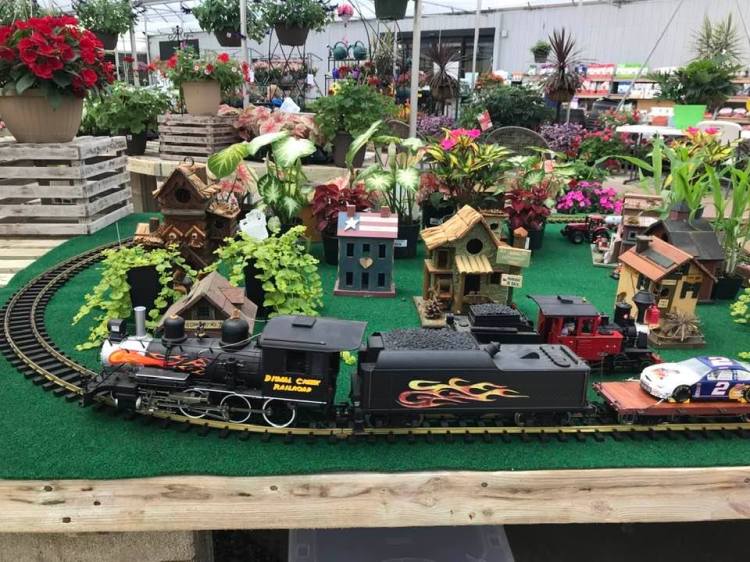
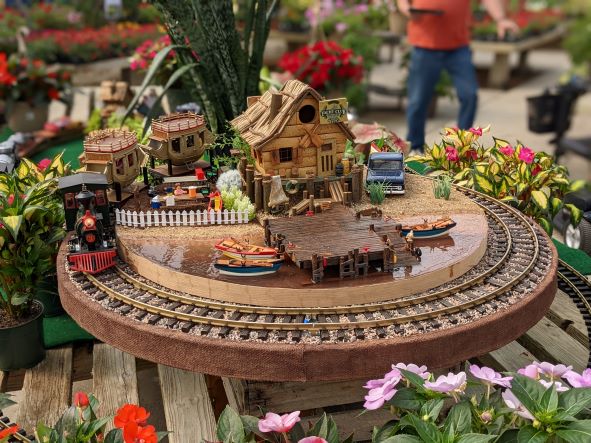
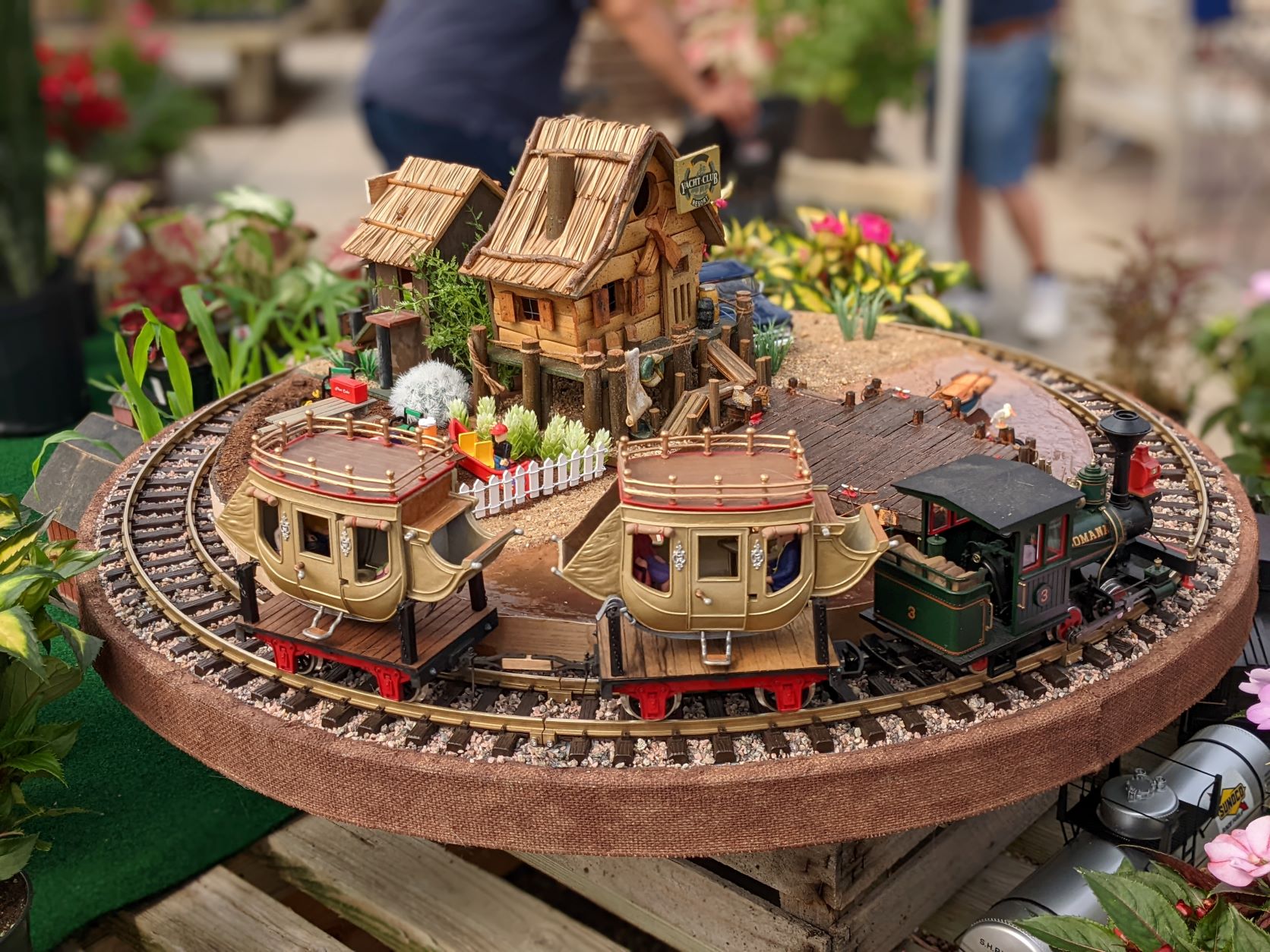
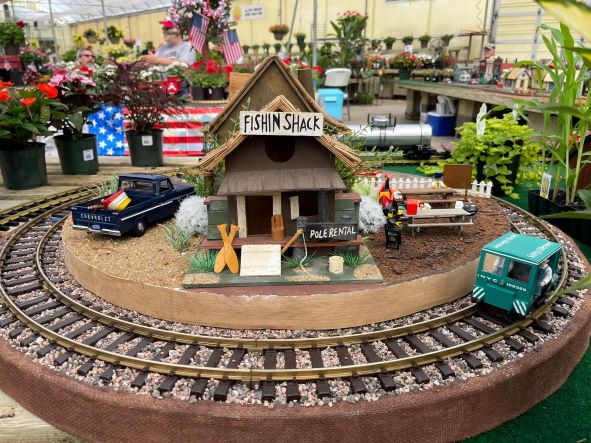
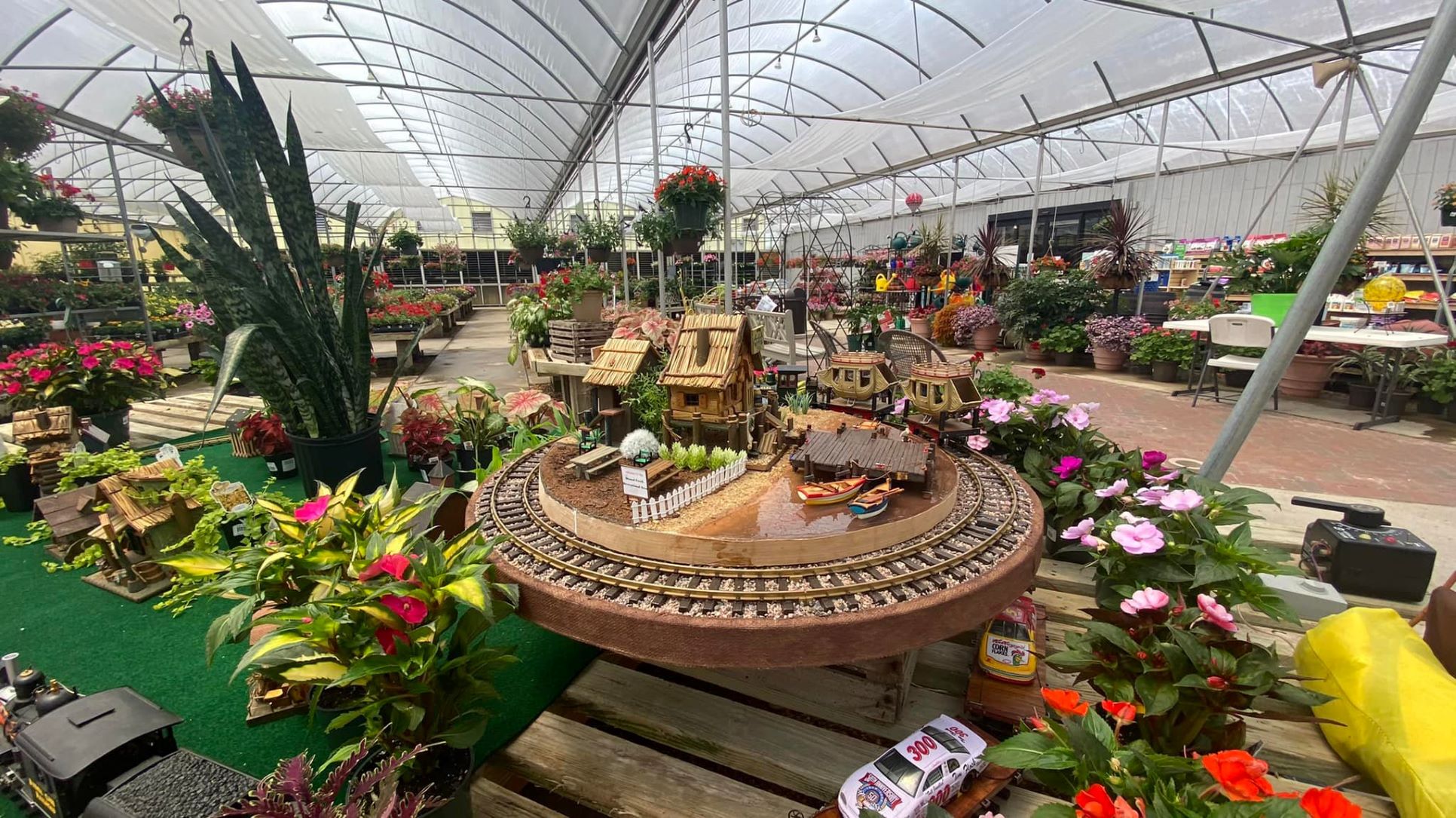
Dismal Creek Recreational Area
In our continuing adventures with micro-layouts we debuted the Dismal Creek Recreational Area. We’re using a 33 inch circle of track that’s ballasted in place on the base with a changeable center diorama. We used a thick piece of foam for the inner portion to accommodate the water depth, in retrospect the diameter should have been smaller as there are very few engines that will fit.
 Before next year Mrs. Claus is going to need some “neck surgery”. Occasionally while bending over to kiss Santa she’ll bop the big guy on his noggin pretty hard. Being so old there is probably a joint that is worn out and I will have to try and cut her clothing back so we can get to her mechanicals.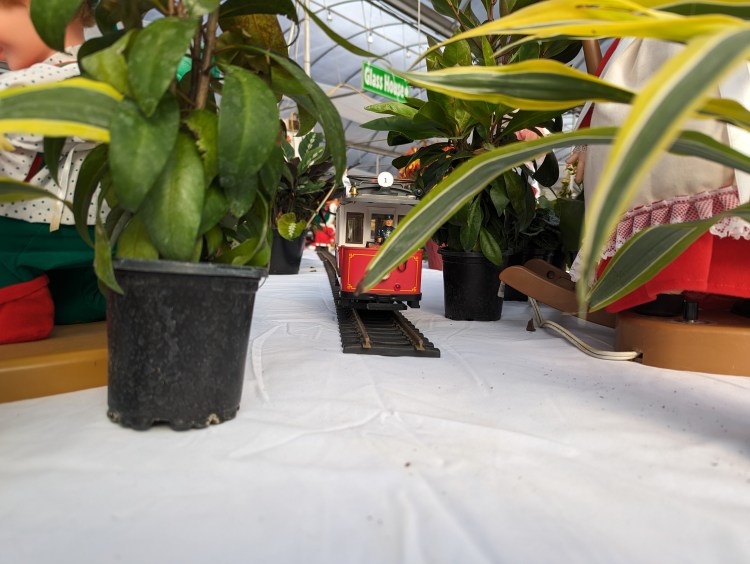

 Dismal Creek Railroad