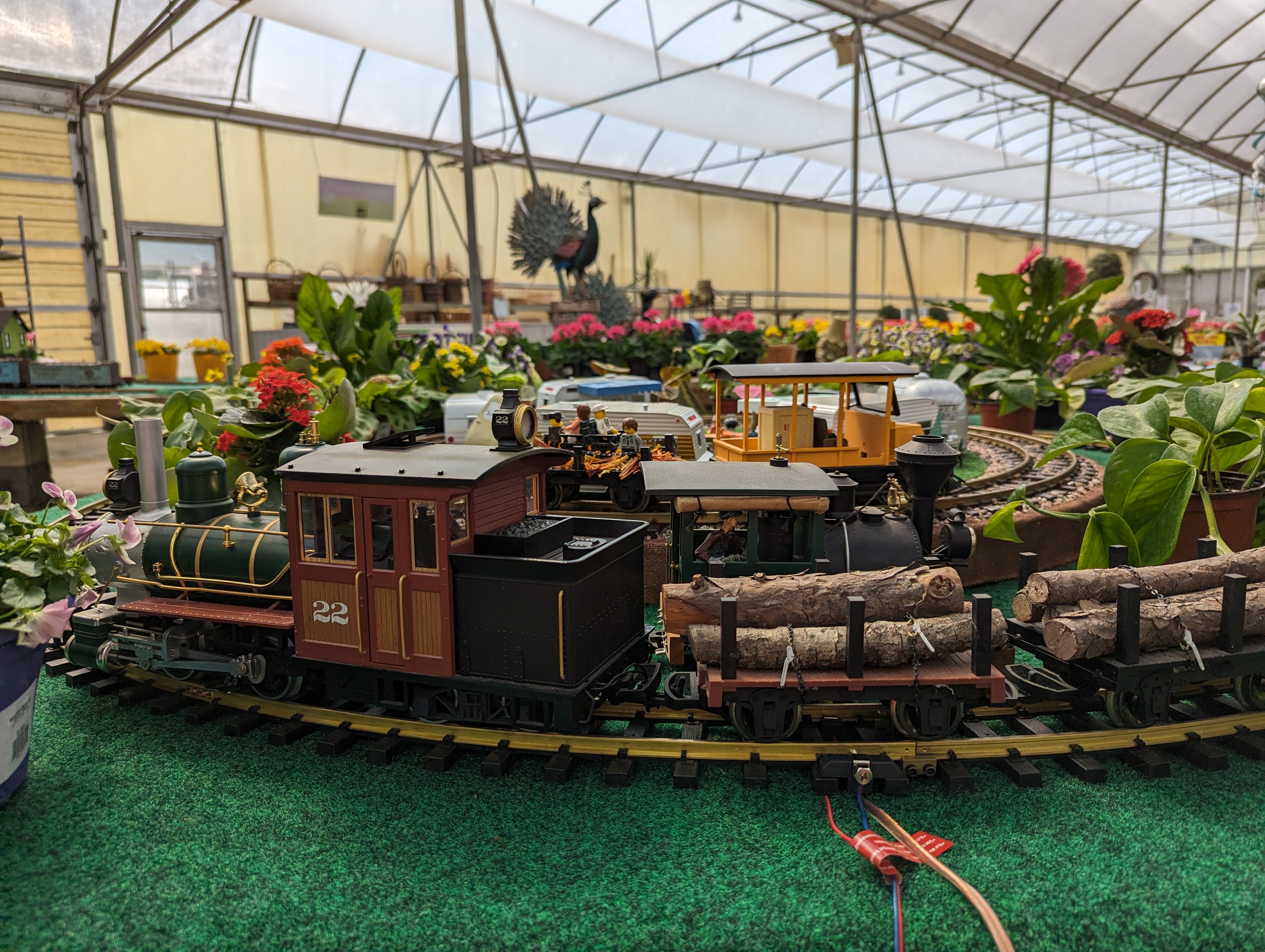
Garden Trains versus Modular Layouts

Two Worlds of Model Railroading: G Scale in the Garden vs. Indoor Modular Layouts

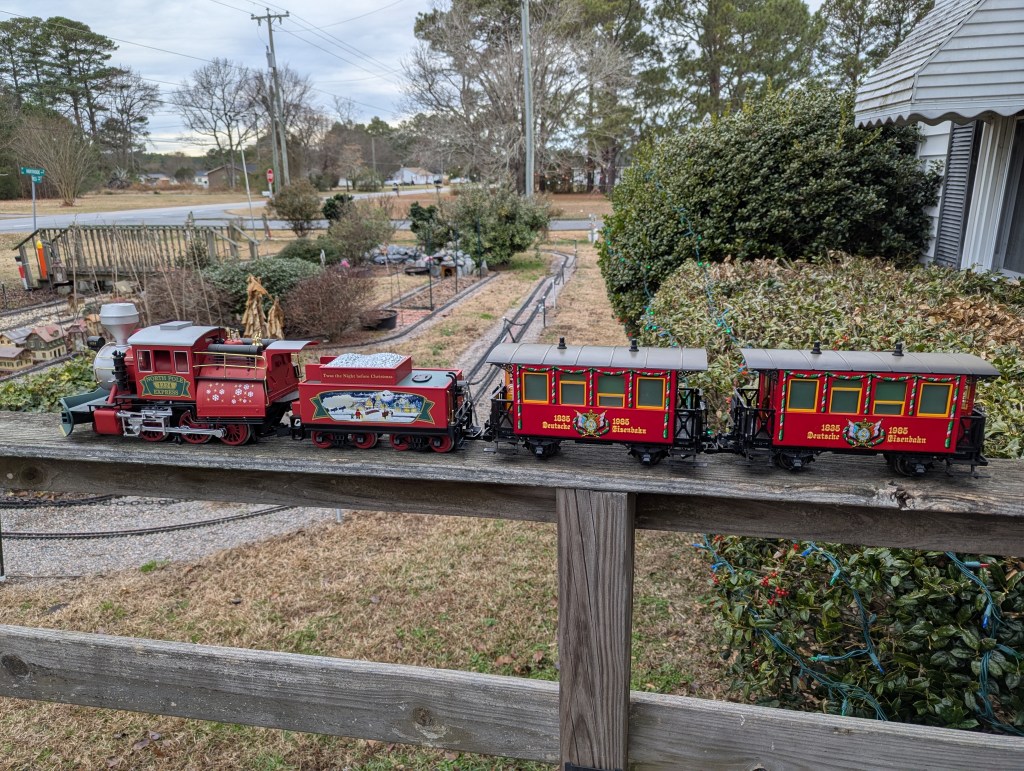
Model railroading is one of the few hobbies that can live comfortably both indoors and out, but the experience changes dramatically depending on where—and how—you run your trains. Nowhere is that contrast more apparent than between G scale trains running outdoors in a garden and smaller-scale trains operating indoors on modular layouts. Both have their own magic, their own challenges, and their own kind of satisfaction.

The Experience: Immersion vs. Precision

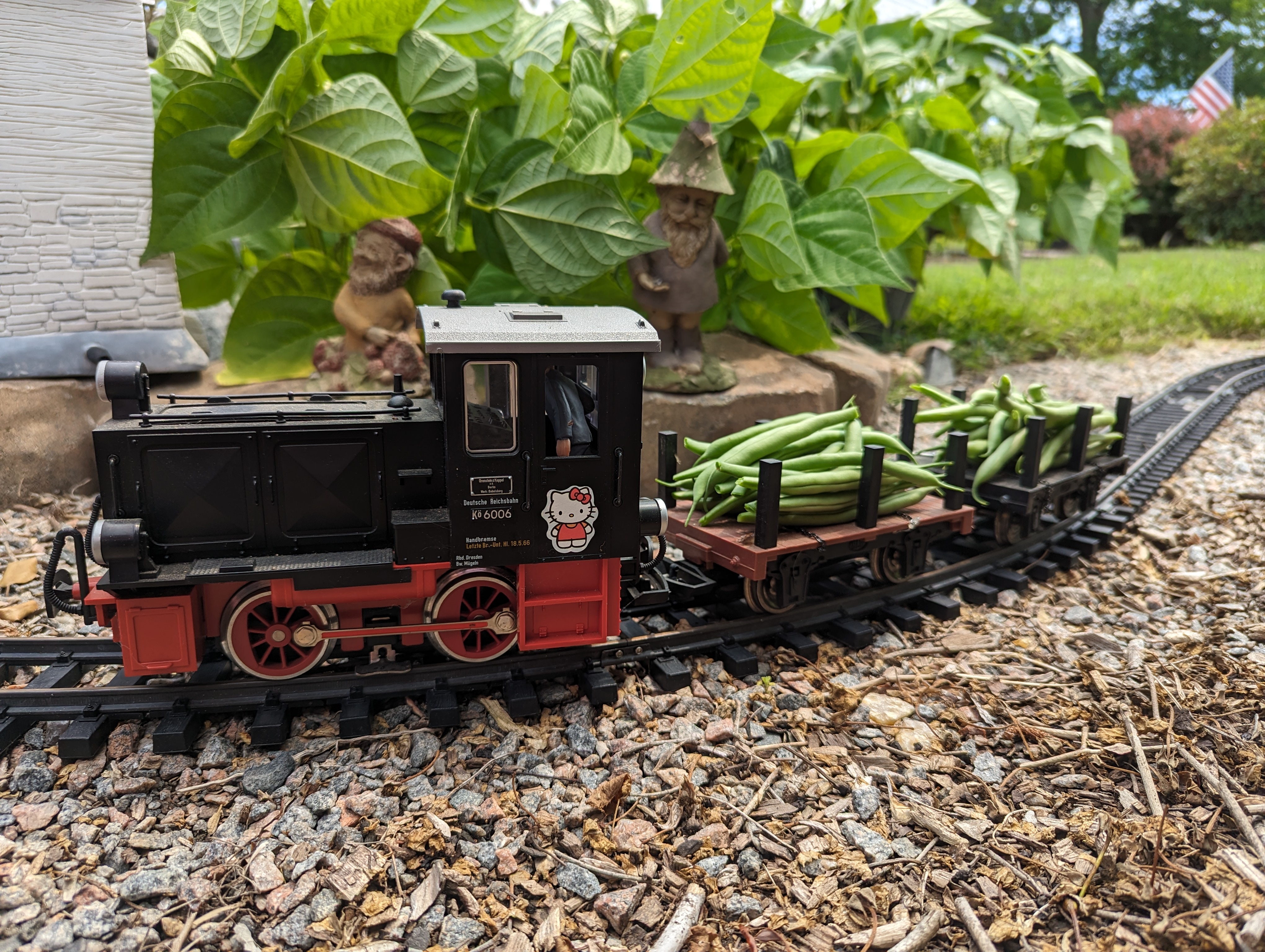
Running G scale trains outdoors feels less like operating a model and more like watching a real railroad come alive in miniature. Surrounded by plants, rocks, and natural terrain, the trains blend into the landscape. Sunlight glints off rails, birds fly overhead, and the changing seasons become part of the railroad itself. The experience is immersive and organic, often enjoyed at a slower, more contemplative pace.

Indoor modular layouts, on the other hand, emphasize precision and control. Everything happens at eye level, in a climate-controlled environment where lighting, scenery, and operations are carefully planned. The focus is often on realistic operations, timetables, switching, and smooth running rather than sheer spectacle.

Space and Scale: Big Presence vs. Clever Compression

G scale thrives on space. The trains are large, rugged, and visually striking, but they need room to stretch out. Curves are broad, grades are gentle, and the layout often evolves with the garden itself. You’re not compressing reality—you’re letting it breathe.

Smaller indoor scales excel at doing more with less. A modular layout can represent an entire division of railroad in a spare room or basement. Tight curves, multi-level track plans, and clever scenic tricks allow modelers to pack impressive realism into limited space. Modular standards also make it easy to expand, reconfigure, or connect with other layouts at shows.

Maintenance: Weather vs. Wear

Outdoor G scale railroading means making peace with the elements. Track needs to withstand rain, heat, cold, and debris. Leaves, dirt, and even curious wildlife can interrupt operations. Maintenance is ongoing, but many garden railroaders see it as part of the fun—more like tending a landscape than tuning a machine.

Indoor modular layouts trade weather challenges for mechanical and operational maintenance. Track stays cleaner, but dust, oxidation, and alignment issues still creep in over time. Electronics, wiring, and turnout mechanisms demand careful attention, especially when modules are frequently transported or reassembled.

Rolling Stock and Durability

G scale equipment is built tough. Locomotives are heavy, cars are sturdy, and minor bumps or derailments are rarely catastrophic. The size makes details easy to see and handle, which is especially appealing for casual operators or visitors.

Smaller-scale models are more delicate and demand a lighter touch. Details are finer, couplers smaller, and derailments can mean more careful troubleshooting. The reward is a level of visual realism and mechanical fidelity that shines in close-up viewing.

Social Aspect: Backyard Gatherings vs. Club Operations

Garden railroading often feels social and relaxed. Friends gather outside, trains circle continuously, and conversations flow as easily as the locomotives. It’s a hobby that invites non-modelers to stop and watch.

Modular layouts shine in organized group settings. Clubs use modules to build massive layouts for exhibitions, with operators assigned roles, schedules, and responsibilities. The experience feels closer to real railroad operations, with teamwork and coordination at its core.

Two Paths, One Passion

At the end of the day, neither approach is “better.” Running G scale trains outdoors is about blending railroading with nature, embracing scale, and enjoying the railroad as part of the environment. Smaller indoor modular layouts focus on craftsmanship, operational realism, and efficient use of space.

Many hobbyists eventually find themselves drawn to both—garden trains for peaceful afternoons in the sun, and modular layouts for winter nights spent fine-tuning operations. Different settings, different scales, same joy: watching a train roll smoothly down the line.

November

What did we do in November? We did nothing at all – at least not train related. November is sort of the lull before the storm that is the period from Thanksgiving until New Year’s Day. For many of us, it is the time to start looking at our stash of Christmas decorations and judging our energy level and motivation for getting them all out and displayed, as the nights grow longer and the holiday spirit begins to creep in. The scent of cinnamon and pine might fill our homes, urging us to put aside our usual routines and embrace the warmth of the season. Alongside this, there is the TBTO Holiday show to prepare for, which adds an exciting layer to our November activities. Those who are setting up layouts have their final touches to get ready, ensuring that everything is perfect for the showcase. Meanwhile, the rest of us will be adjusting and fidgeting with our calendars to fit everything in, juggling social gatherings, family dinners, and those cherished traditions that bring us joy during this festive time.

November is the time to rest up and prepare for holiday dinners, where families gather to share laughter, stories, and delicious meals that warm the heart whether celebrating Christmas, Kwanzaa, Hanukkah or Festivus. We hold in the light and our thoughts and prayers go out to those hosting these special gatherings, as they often bear the responsibility of creating a welcoming atmosphere for friends and family. During this month, we also look forward to open houses, Christmas parades, and Grand Illuminations, which serve as festive reminders of the joy and magic the season brings. Although Black Friday is not the crazy, hectic mess of years gone by, the anticipation it generates can still create a buzz around holiday gift shopping, which remains an “interesting” time, drawing people into the excitement, challenges, and occasional chaos of finding the perfect gifts for loved ones, reminiscent of the enigmatic wisdom found in the apocryphal Chinese proverb that warns of living interesting times.

November is when we inventory our pantries and pull out cherished recipes in order to be ready for those beloved foods and treats that help define the holiday season. This is a time of nostalgia, where memories of past gatherings encourage us to recreate the flavors that unite friends and family around the table. We all have that/those mandatory dish(es) that simply must be present to make this time complete, each bite evoking warmth and joy from years gone by. Whether they be cookies and cakes, laden with sprinkles and icing, or simply a side dish that we, and we alone, are capable and responsible for providing each year, this is the time to restock the larder with the ingredients that bring these special meals to life. As we gather our supplies, we reflect on the heartwarming stories behind each recipe, the laughter shared, and the love that has been baked into each dish over the years, making this season not just about the food, but about the connections that nourish our souls.

And if one of your traditions is arriving hours early to capture a prized viewing spot for the Grand Illumination of Colonial Williamsburg, downtown Norfolk, or rural Elizabeth City, or perhaps you have your eyes set on a specific spot of curb to see the annual Christmas parade, then you’ll want to make sure you come prepared. As the air grows crisp and the anticipation builds with the festive atmosphere, a cherished recipe for Brazilian Hot Cocoa emerges as the perfect companion to keep you warm. This rich and sumptuous beverage, made with creamy milk, high-quality cocoa, and a hint of sweetness, not only warms your hands as you cradle the cup but also fills your heart with the spirit of the season. Each sip takes you on a journey of flavor, reminding you of cozy gatherings and joyful moments shared with family and friends during this magical time of year.

Brazilian Hot Chocolate

4 cups whole milk
14 oz sweetened condensed milk (one can)
¼ cup unsweetened cocoa powder
4.5 oz semisweet chocolate, chopped or in morsels
½ tsp Vanilla extract

In a large saucepan, heat the milk and sweetened condensed milk over medium heat.
When it begins to slowly simmer, stir in the cocoa powder. Next, add in the chocolate a little bit at the time, stirring in between each addition to allow it to melt.

Continue stirring the mixture over medium heat until all of the chocolate has melted and you have a smooth, creamy mixture.

Remove your Brazilian hot chocolate from the heat and stir in the vanilla extract.

Serve hot in mugs with your favorite toppings and garnish.

Winter Doldrums

Sigh. So many projects and so little desire to get out in the cold and the muck to work on them. One thing about living in coastal North Carolina is that we do not really get a “Winter”. Years ago I lived in New England and the Engineer was raised in Michigan. You knew it when it was winter. There was snow, everything was frozen and it was cold. All of that combined to make anything garden or outdoor train related out of the question. Here we get very little snow, a lot of rain and it is just cold enough to quash any desire to get out and do something when the sun does make an appearance.

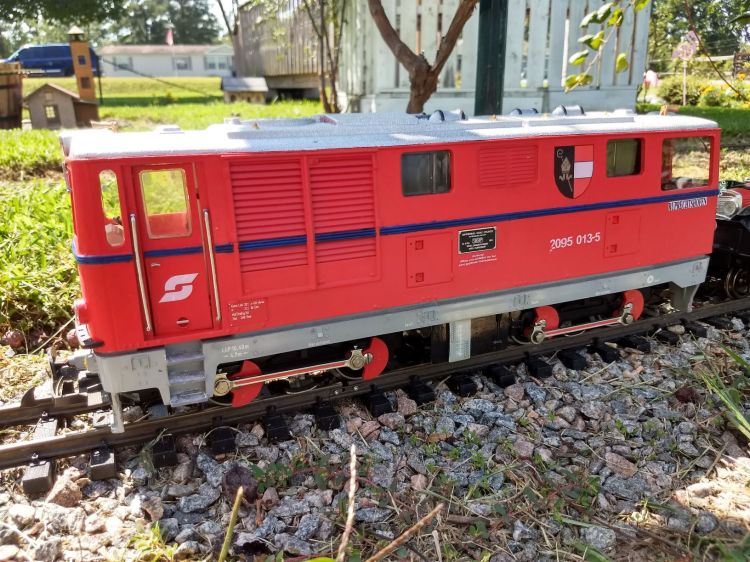
I do have indoor projects to be working on. We bought eight of the Newqida Harz passenger cars to use as a consist with our LGB ÖBB B’B’ 2095 engine.

Narrow gauge diesel-hydraulic engine

It being a European locomotive it naturally needed a set of appropriate cars to go with it. The Newqida offerings are probably a little lower quality than the LGB equivalent, but they are nicely detailed and only 20% of the cost. Some of the parts look a bit too “plasticky” for my taste so they need to be disassembled and quick coat of paint applied along with interior lighting added. Rattle can painting needs to be done outside so they sit waiting…

With regards to the train garden itself, winter has a way of humbling it. Gone are the lush greens of summer and the proud harvests of fall. In their place stand rutabagas hunkered low in the soil, kale with leaves dulled by frost, and collards drooping under the weight of cold, gray days. At first glance, the winter garden can look tired—almost defeated—but looks can be deceiving.

Our rutabagas are the quiet survivors of the season. Mostly hidden underground, they don’t offer much visual excitement, just a rosette of worn-looking leaves clinging to life above the soil. Yet beneath that dreary surface, the roots are steadily sweetening as temperatures drop. Cold transforms their flavor, turning them from sharp and peppery to mild and comforting, perfect for soups and roasts when the weather turns harsh.

Kale and collards wear winter more visibly. Their once-perky leaves often look battered, edges curled and darkened, sometimes tinged with purple from the cold. They can appear sad and neglected, especially after a hard frost or a stretch of freezing rain. But these greens are tougher than they look. Frost breaks down their starches into sugars, improving flavor and making them some of the tastiest greens of the year, even if they no longer look photo-ready.

There’s a quiet beauty in a winter garden, even when it looks dreary. The muted colors, the slow growth, and the resilience of these crops remind us that gardening isn’t always about abundance and perfection. Sometimes it’s about endurance. Rutabagas, kale, and collards don’t demand attention in winter—they simply persist, waiting patiently for the gardener who knows that life is still happening beneath the surface.

Winter gardening asks for a shift in perspective. Instead of judging plants by their appearance, it rewards patience and faith in what’s unseen. Those ragged leaves and muddy beds are signs of a garden doing exactly what it’s supposed to do: surviving the cold, storing energy, and offering nourishment when little else will grow. Dreary as they may look, winter greens are proof that the garden never truly sleeps.

Here in coastal Carolina, the bedraggled semi-frozen garden, which has endured the abuses of winter, is going to require attention shortly, regardless of how dreary and uninviting working outside is at the moment. The rutabagas, which have stubbornly held their ground throughout the cold months, need to give way shortly for potatoes to go in the ground, ensuring a bountiful harvest come summer. As the sun begins to warm the soil, the kale and collards, once thriving in the frigid air, will have to make room for vibrant carrots and sweet peas, allowing for the garden to transform into a rich tapestry of colors and flavors that will delight the senses and nourish the body. With each passing day, the promise of renewal and growth becomes ever more apparent, urging the gardener to take action and cultivate the earth once again.

We also have plans for supplementing the ballast under our tracks and making long straightaways less higgity jiggity and upgrading the electrical system, but both of those will have to wait until the ground is a bit less frozen.

Selma Railroad Days

Nobody puts on a parade like a small Southern town, such as the one for the 50th Annual Selma Railroad Days Festival. Their golden anniversary celebration was the largest in its history, and the crowds were there to help this small town (population ~7000) show its appreciation for its railroad heritage.

On May 1, 1867, they started selling lots around a new station on the North Carolina Railroad, and that’s how the town came to be. It hung on as a railroad town for quite a while, which meant many folks from nearby areas would stop by for work or a bit of leisure. Selma officially became a town on February 11, 1873, marking a significant moment for the community as it began to flourish.

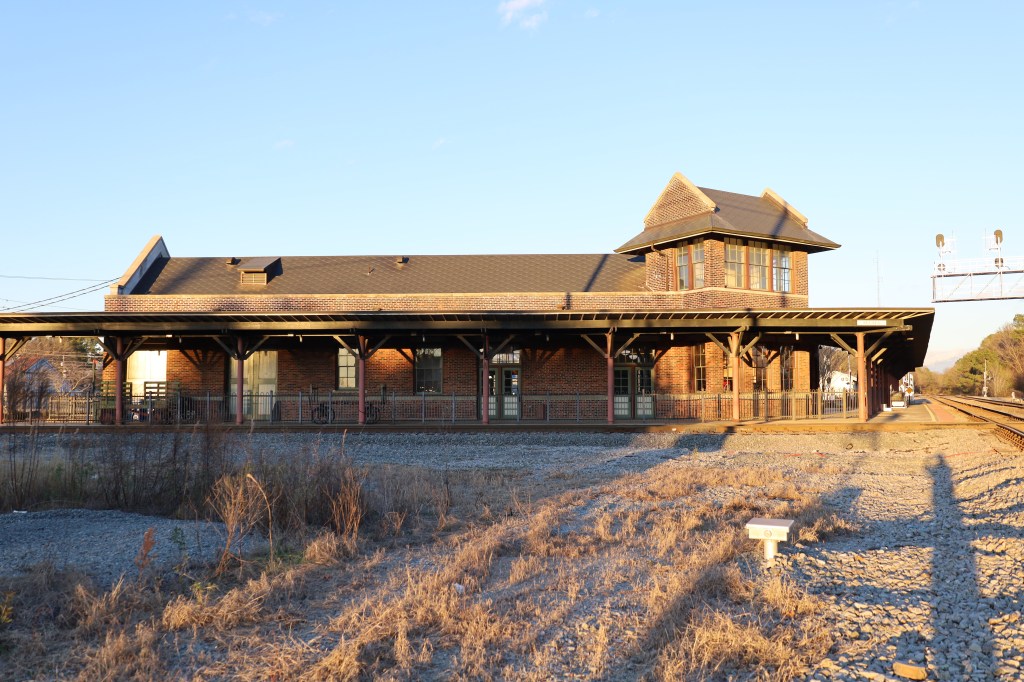
When the 1920s-era passenger depot was scheduled to be demolished in the mid-70s, the town bought and restored it. The re-opening of the station in 1976 marked the initial Selma Railroad Days celebration. They now have Amtrak service on the Palmetto and Carolinian lines, allowing even more travelers to experience the charm of Selma. In addition, three more Amtrak lines pass through, but do not stop. CSX and Norfolk Southern trains also travel the tracks.

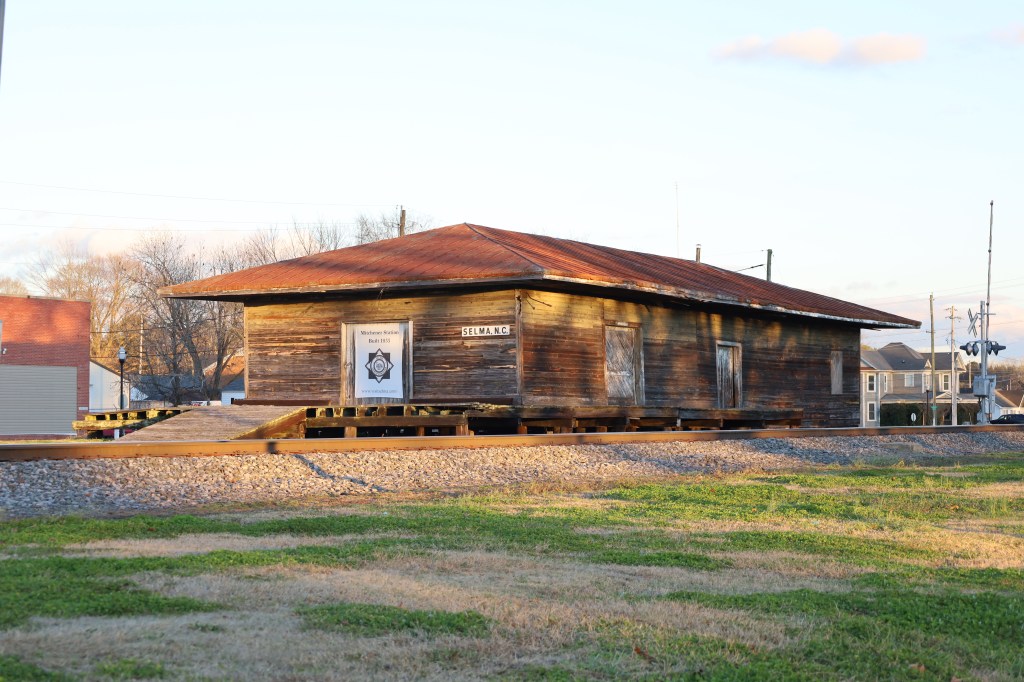
The town’s original Mitchener Station, built in 1855, is thought to be the oldest train station still standing in North Carolina, a testament to the area’s rich history.

By Antony-22 – Own work, CC BY-SA 4.0, https://commons.wikimedia.org/w/index.php?curid=107161803

In addition to the parade down the town’s main street, which showcases colorful floats and lively performers, numerous bands play on stages located around downtown, filling the air with a variety of musical genres that entice passersby to stop and enjoy the performances. Vendors line the sidewalks, offering an array of handcrafted goods and local delicacies, while an entire side street is given over to an assortment of food trucks, each presenting mouthwatering options like gourmet tacos, artisanal ice cream, and savory barbecue that tantalize the taste buds and invite visitors to indulge in the culinary delights of the event. As families wander from booth to booth, the atmosphere is electric with laughter and music, making it a perfect day for the community to come together and celebrate.

The North Raleigh Model Railroad Club set up their amazingly detailed N-scale modular railroad in the lobby of the Selma Union Station, where every intricate detail of their design captivated visitors with lifelike scenery, bustling miniature towns, and meticulously crafted trains whizzing by. Meanwhile, the Southeast division of the Train Collectors Association (SE-TCA) sponsored a model train show in the civic center, which attracted enthusiasts from far and wide. The SE-TCA show featured several impressive O and HO scale layouts that showcased the creativity and craftsmanship of various modelers, as well as many vendors selling their wares, including rare collectibles, miniature accessories, and the latest train technologies, providing an exciting shopping experience for attendees.

While Selma Railroad Days spans an entire week, most of the festivities are concentrated around Friday, Saturday, and Sunday, creating an exhilarating atmosphere that draws in locals and visitors alike. The small town definitely knows how to throw a party, transforming its streets into a vibrant celebration filled with music, food stalls, and activities that cater to families and friends of all ages. From exhilarating train rides that evoke a sense of nostalgia to lively parades showcasing the town’s rich history, there is something for everyone to enjoy. A wonderful time was had by all attending, as laughter and joy filled the air, creating unforgettable memories that people cherish long after the festivities have concluded.

Happy Daisy Train Show

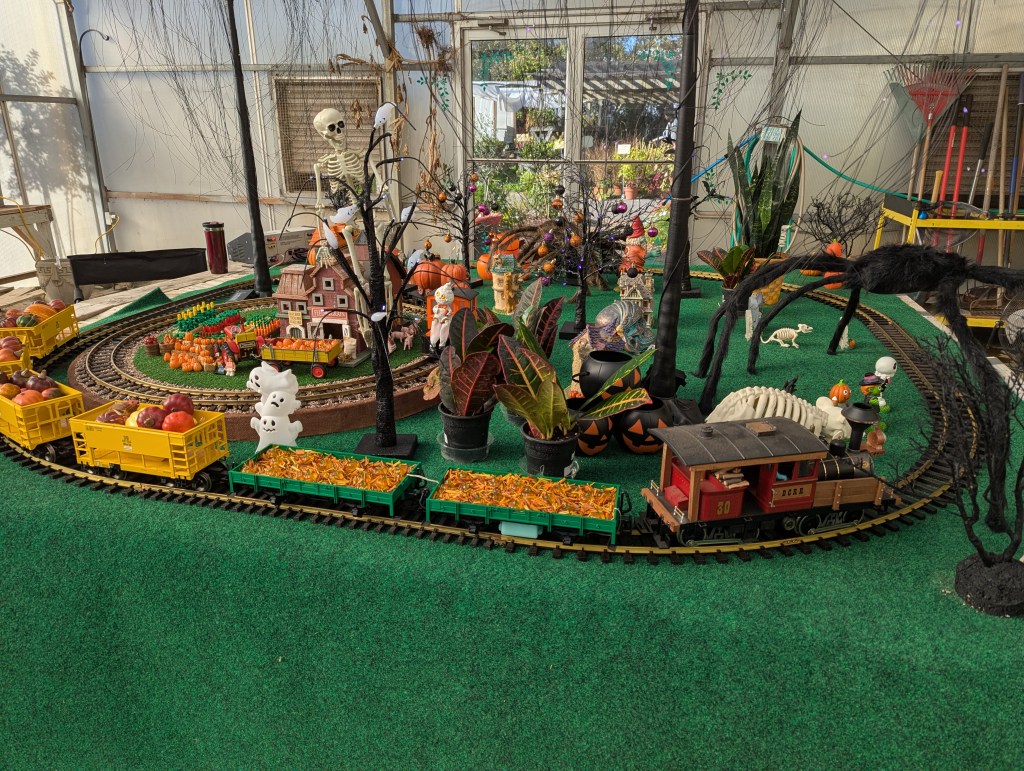
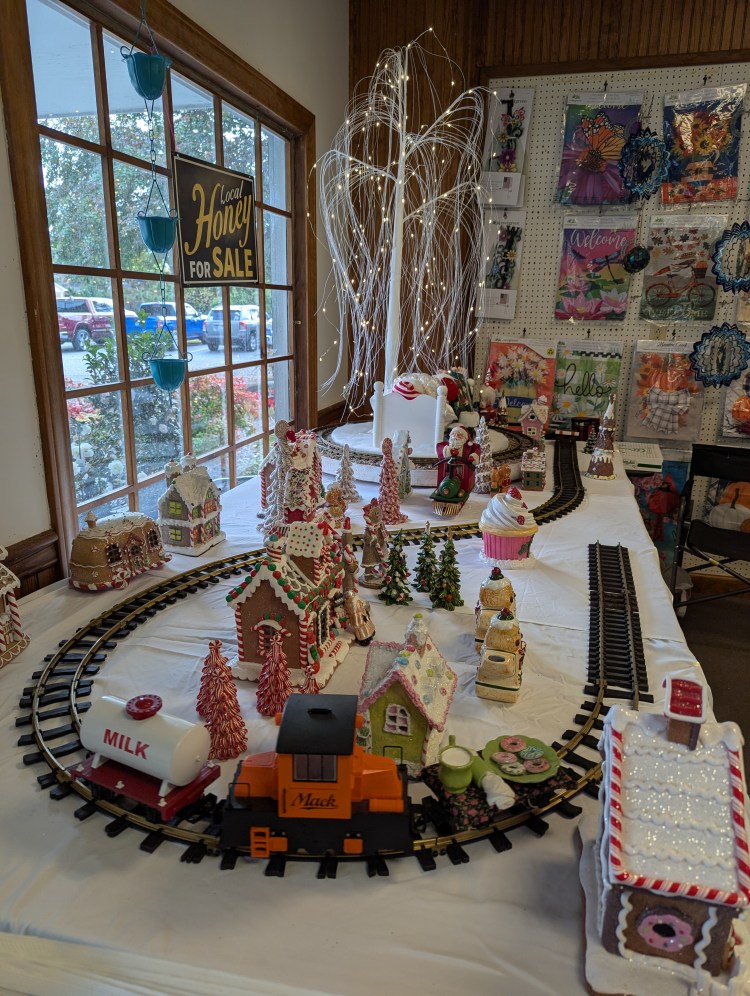
The Tidewater Big Train Operators returned to the Happy Daisy Garden Center in Elizabeth City for another spectacular train show, bringing with them an impressive array of models and displays that captivated visitors of all ages. Setup was done early on Friday, October 17th, as the dedicated team meticulously arranged the tracks and ensured each train was operational, creating an immersive experience for everyone involved. Throughout the day, trains were running smoothly, delighting spectators with their intricate designs and realistic movements, and the excitement continued into Saturday the 18th, when even more attendees joined in to marvel at the intricate layouts and interact with the friendly operators, who were eager to share their knowledge and passion for the hobby.

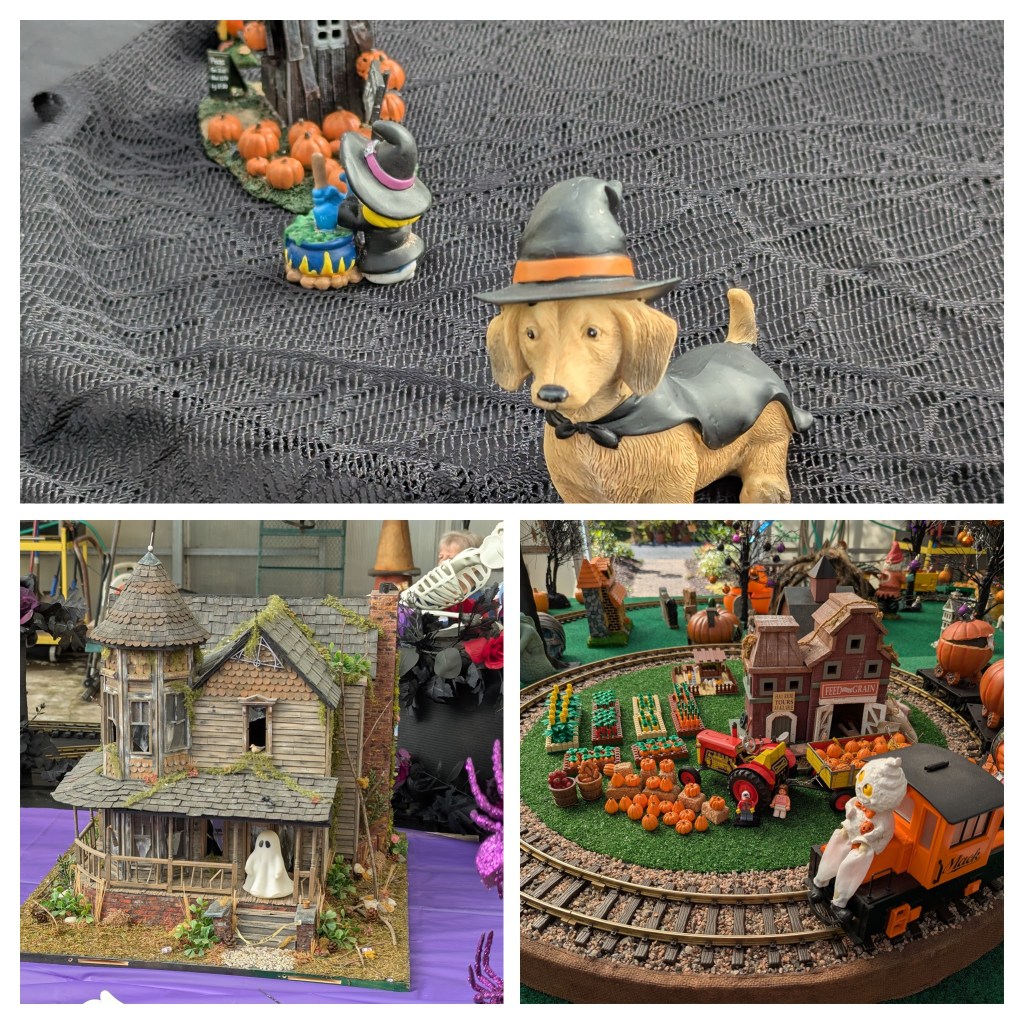
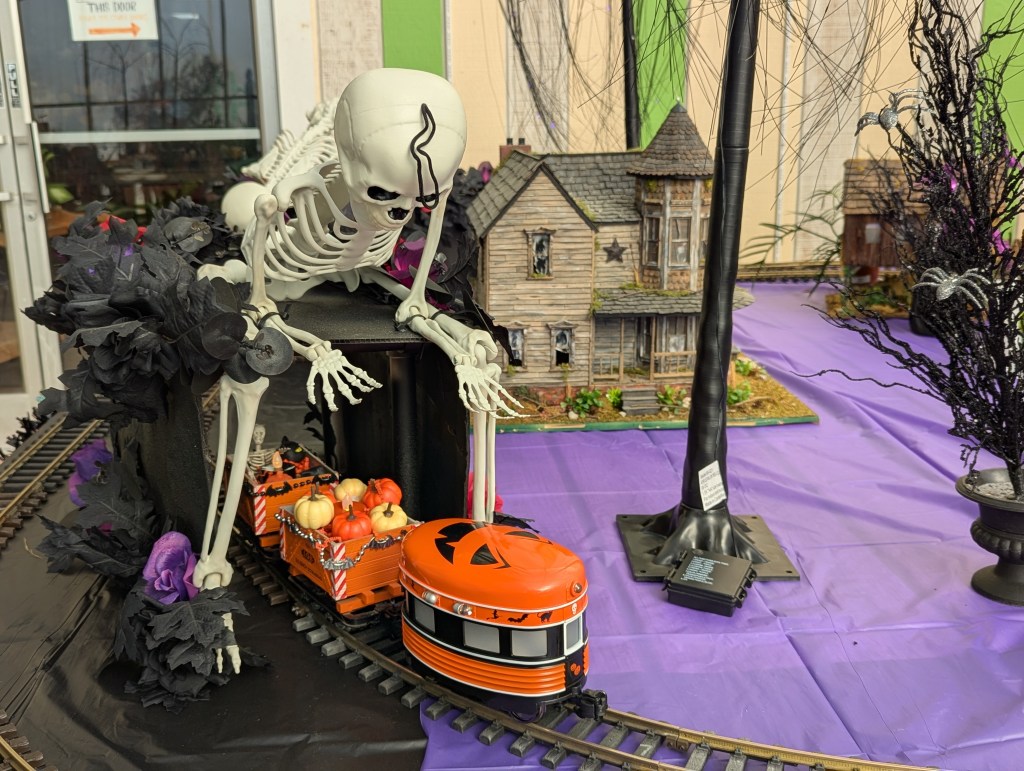
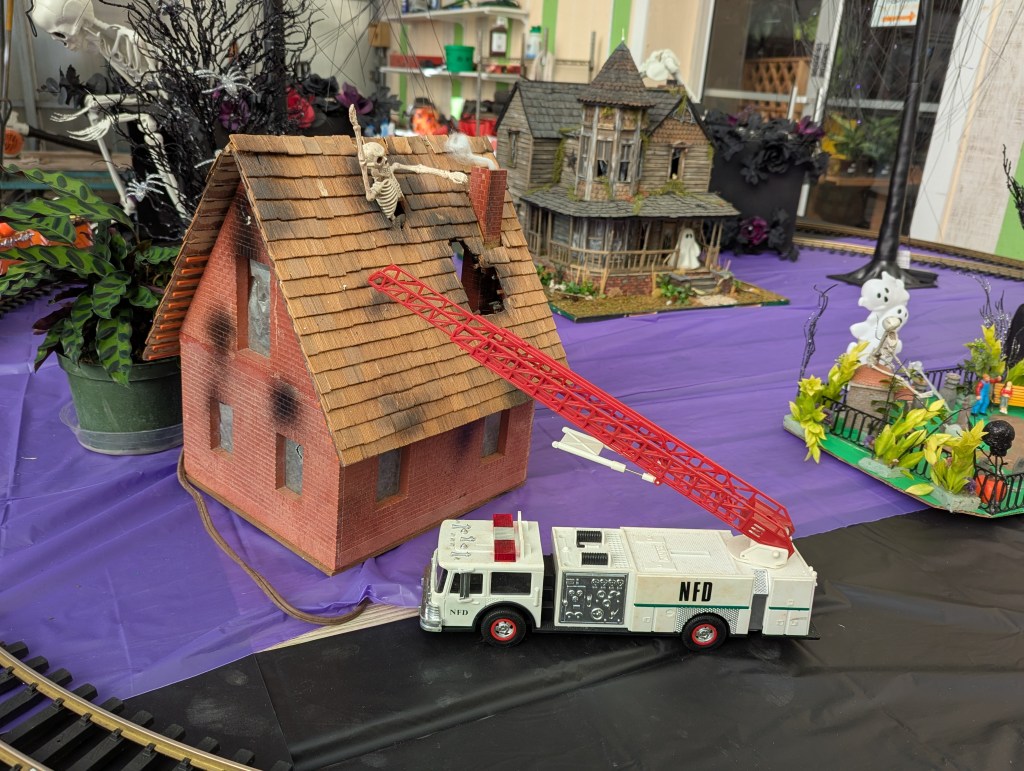
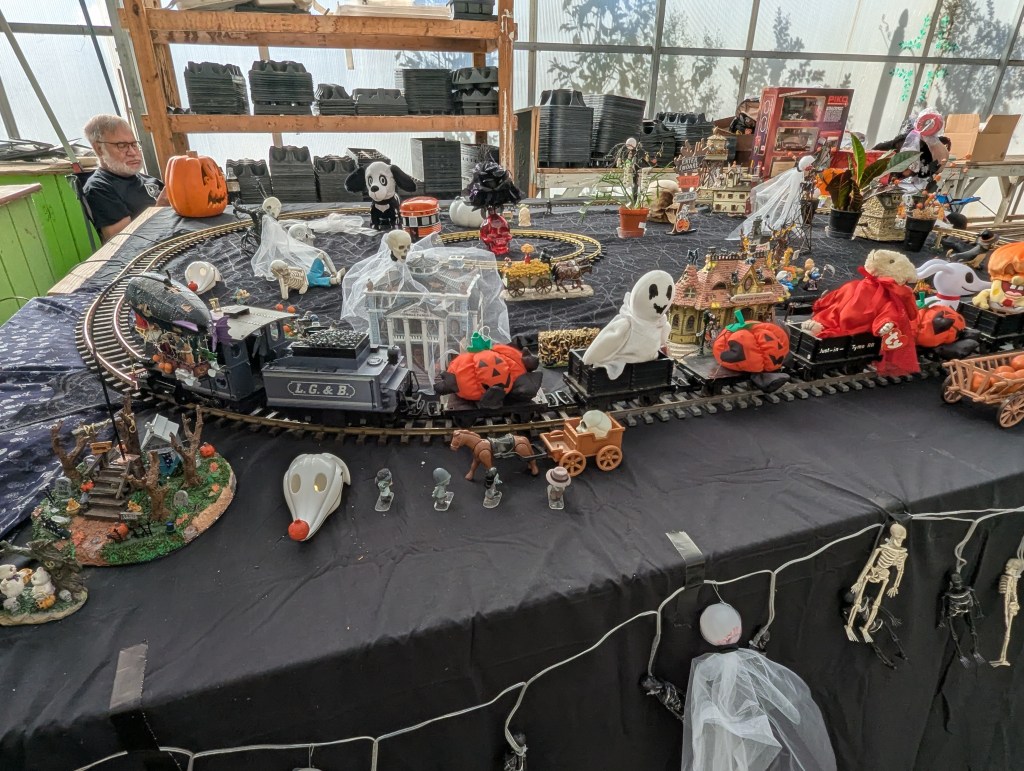
For the first time in many years, the timing of the show has provided us with the perfect opportunity to dig through our train closets and break out the Halloween displays that have been tucked away for far too long. We are excited to uncover a treasure trove of spooky decorations, from intricately designed ghosts and ghouls to vibrant pumpkins and eerie backdrops. Each item not only brings a sense of nostalgia but also ignites our creativity as we plan to showcase them in a way that brings the spirit of Halloween to life. This year, we were determined to transform our train exhibit into a whimsical Halloween wonderland that captures the imagination of visitors young and old, making it an unforgettable celebration of the season!

Tal and Suzanne showcased some of the magnificent buildings created by the Reids.

Sherry&Dave and Sophie&Archie dug through their train paraphernalia closets and pulled everything they could find in orange and black.

This was the club’s second opportunity to run trains at the Happy Daisy, and while it hasn’t reached the attendance levels that used to come out to White’s Nursery, it was nonetheless a chance to show off our beloved hobby to a wider audience. The atmosphere was buzzing with excitement as enthusiasts and families alike gathered to enjoy the spectacle of miniature locomotives chugging around the track. We set up various displays, which allowed visitors, both young and old, to engage with our models and learn more about the intricacies of train operations. Although the turnout was modest compared to past events, we were delighted to see a fair number of people come out to enjoy watching the trains go round and to appreciate the artistry and craftsmanship that goes into model railroading. This event not only allowed us to share our passion but also to foster connections with the community, inspiring others to take an interest in this timeless pastime.

“G” Is For Garden

Garden Train (ɡärdən trān)

A garden railroad is a model railway set up outdoors in a garden. We run G gauge trains in ours. A garden is “a piece of ground, usually close to a house, for growing vegetables, fruits, flowers, ornamental shrubs or trees, etc.”

Our yard is laid out unusually. We live in a 100+ year old farmhouse with no farm left. The fields on one side were sold to the county for a school complex. All we have now on that side is our driveway and a couple pecan trees. What land is left on the other side of the house has our septic field under it. There is no back yard at all, that was all sold off for a housing development. That leaves us with a fairly large front yard as the only open spot we can recreate on, so that is where our train layout lives and our gardening is squeezed in there too.

We just finished up our third year of vegetable gardening within our train garden and now we’re starting the new season. Yep, here on North Carolina’s coastal plain region we start planting in January. Sweet peas will go in first followed by carrots. Really though, gardening just carries over from season to season. We still have kale, mustard and rutabagas growing in some of the raised beds.

Last year we grew English peas, two varieties of Southern beans and two of green beans. We had a very good crop of carrots and a miserable bunch of paste tomatoes. Figs and pecans were abundant, sweet peppers not so much so; though in the pepper’s defense they were sort of overrun by the Conch Peas that I was unable to keep under control.

The Conch and Whippoorwill Southern/Cow peas we grew are both vigorous climbing varieties and need more support than we gave them, we have something stronger planned for this year. The sprawl of the conch peas made two of our train tracks unusable for much of the growing season.

Christmas Eve Open Train Yard 2024

We started running trains on Christmas Eve the first year the Engineer and I were dating. We have an “open yard” for anyone who cared to drop by. It started when we lived in a small community that had a combination hayride/caroling ride. The Engineer drove the tractor that pulled the hay wagon with the carolers. Meanwhile, the Conductor set out cookies and hot chocolate in the train room (I do NOT carol).

Twelve years later and having moved to North Carolina we still continue the tradition. Now though, as it is open to anyone who shows up and we don’t know who all that is, it has become a strictly outside in the yard event. And hence more contingent on the weather. We have been fortunate though that we’ve only been unable to do the Christmas Eve Open Train Yard twice. One year it started out as a light drizzle. We explain to those who ask that we run Garden Trains, they can handle a little rain. What they can’t deal with though is when the drizzle starts freezing on the tracks and traction goes away. The trains became a static display at that point.

Another weather factor that comes into play is the cold. The trains need lubrication, especially steam models with a lot of running gear. Low temperatures are the enemy of lubrication. The Engineer and Conductor are getting older, and we don’t handle the cold as well either. So, on the Christmas Eve when it was 20 degrees F outside, we decided to not run trains.

We always put out a spread of Christmasy munchies to help spread a little holiday cheer. This year it was hot mulled cider and hot chocolate, fruitcake plus an assortment of cookies. The fruitcake is an old family recipe that was passed down from my great Aunt. My Mother used to make it before she passed away, my Aunt still does and so do I. My version is aged for a couple months wrapped in a brandy soaked cloth (I warn the parents of any kids who come by). In a first for me this year I made some gingerbread men from a recipe used by Colonial Williamsburg. I thought they turned out well and they were popular.

We have a dedicated Christmas train that runs once or twice a year (there are five more cars), and we operated our other train that actually features lighted cars. Getting everything ready was pretty hectic this year. We aim to be all set up (with trains running, drinks and goodies on a table, heat source going, etc.) by around 5:00. It drizzled intermittently all day until four, and then we rushed to prep the track and get the trains on it. One track gave us fits all evening and we took some notes on places where the track had been damaged. Items for a spring to-do list in the train garden.

Eventually though trains were on the tracks, cider and cocoa was being drunk and cookies munched upon. Every year our hope is just that someone/anyone will show up and every year people have come by. (Except for the year it was 20 degrees. This is North Carolina, not Maine, no one down here is going to go out in that sort of weather just for some cider and cookies.)

This year we enjoyed the company of current neighbors, old neighbors, new friends and a surprise visit from old friends who drove down from the Richmond, VA area. We try to keep it low key and not too much effort on our part as we know that many families have their own Christmas Eve traditions. And every year we wonder if this will be the year when we threw a “party” and no one showed up and decide it is not worth the effort. This was not that year. We had a wonderful time and it was great to visit with friends old and new.

Happy Daisy Garden Center

We have a new location for putting on train shows – the Happy Daisy Garden Center in Elizabeth City, NC. With the closure of White’s Nursery in Chesapeake VA earlier this year the Tidewater Big Train Operators (TBTO) club lost a venue where we had been setting up smaller shows for over a decade. The owner of the Happy Daisy nursery is also a model train fan and participates in the Albemarle Model Railroad Club, running “O” Scale trains; he enthusiastically extended an offer to the TBTO to set up layouts in the showroom area of the garden center.

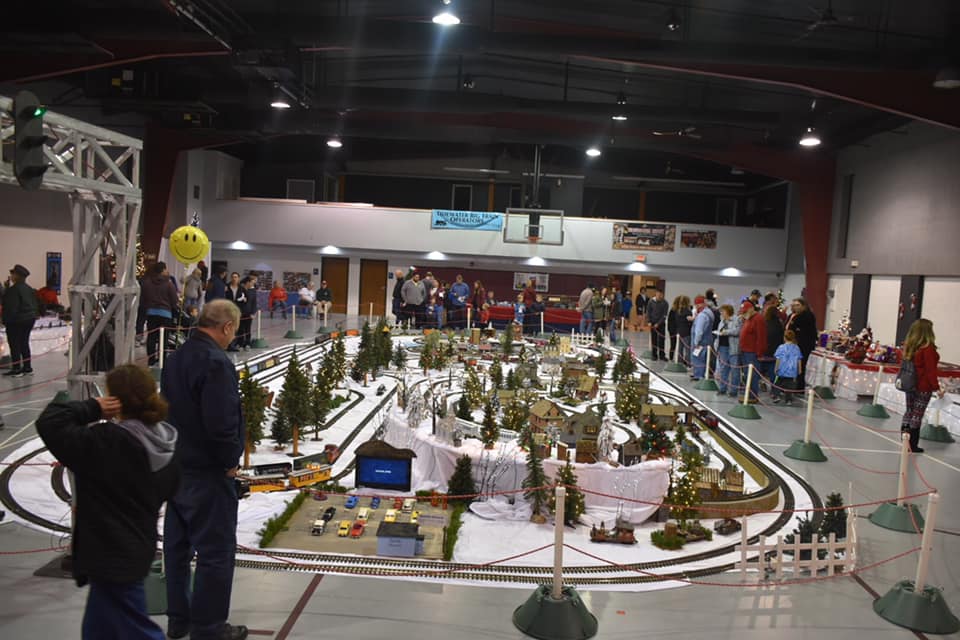
Our model train club hosts an annual holiday train show that has been occurring for almost 30 years and also participates in most of the convention center train shows in the area; however, those are significantly larger undertakings (the holiday show occupies an entire gymnasium).

When the Engineer and I joined the TBTO, we resolved to limit our participation in shows to what we could transport in our vehicle. It’s very easy to get carried away when given an 8 by 24 foot space to create a layout with a week to set up for the holiday show. We struggled to adhere to our resolution; we’ve constructed five layouts for the club’s holiday shows, and by 2019, we required a pickup with a trailer and a Chevy Suburban to transport all of our supplies back and forth.

Last year, we implemented a much simpler layout in the central common area for the show; however, living in North Carolina while the show was in Virginia resulted in extensive driving and late hours. So going forward we’ll help with setup and takedown and be there a few days to help out but it is unlikely we will be doing anymore layouts of our own. Which, with the closing of White’s Nursery, left us with no regular options for doing a layout of our own at shows.

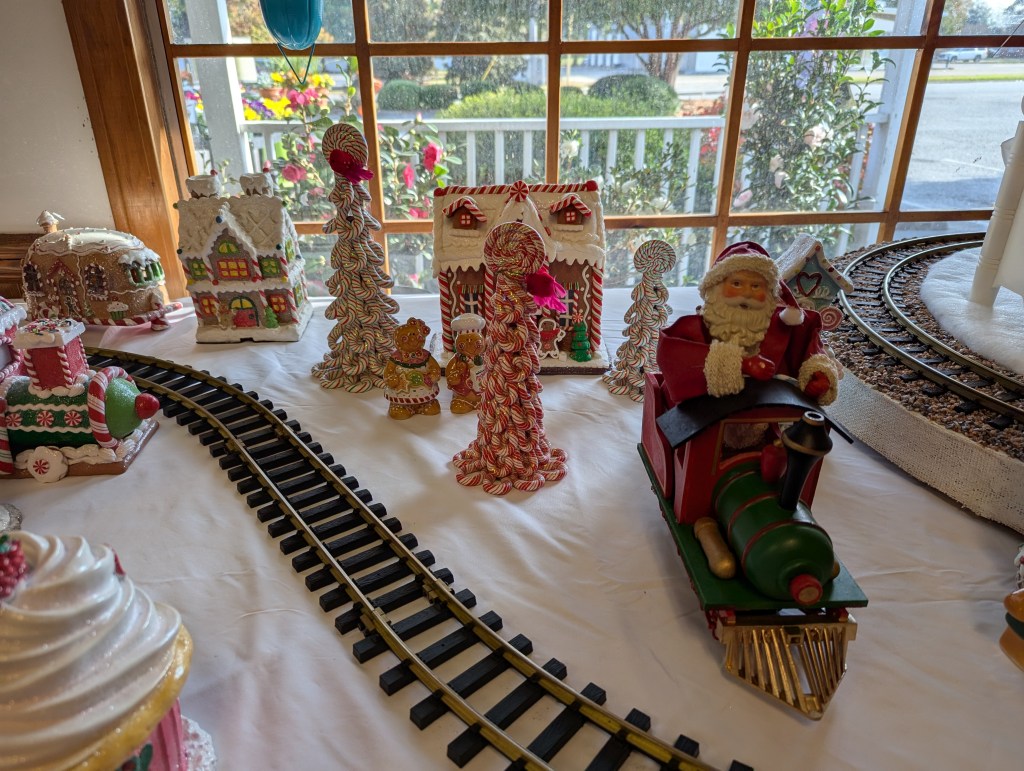
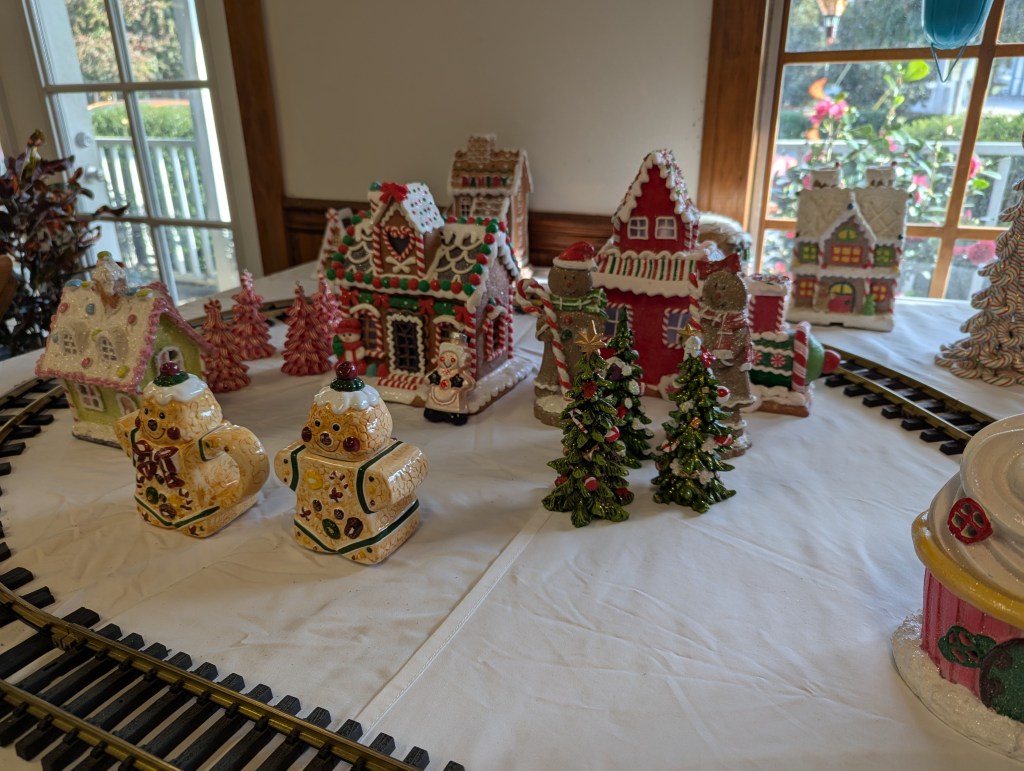
And then (to get back to the heart of this post) we got the invitation from the Happy Daisy. <<happy dance>> There were several 8 by 8 foot tables there but we chose a 4 by 10ish foot spot to set up on. The smallest diameter curves offered by the major G Scale train companies is a nominal four foot diameter circle, which, as it is measured from the center of the track, will not fit on a four foot wide table. Over the years a couple manufacturers (Aristocraft/Hartland Locomotive Works) have put out smaller diameter track but, those are all out of production and hard to come by. We have a couple circles of the smaller track but they are both permanently mounted on small displays.

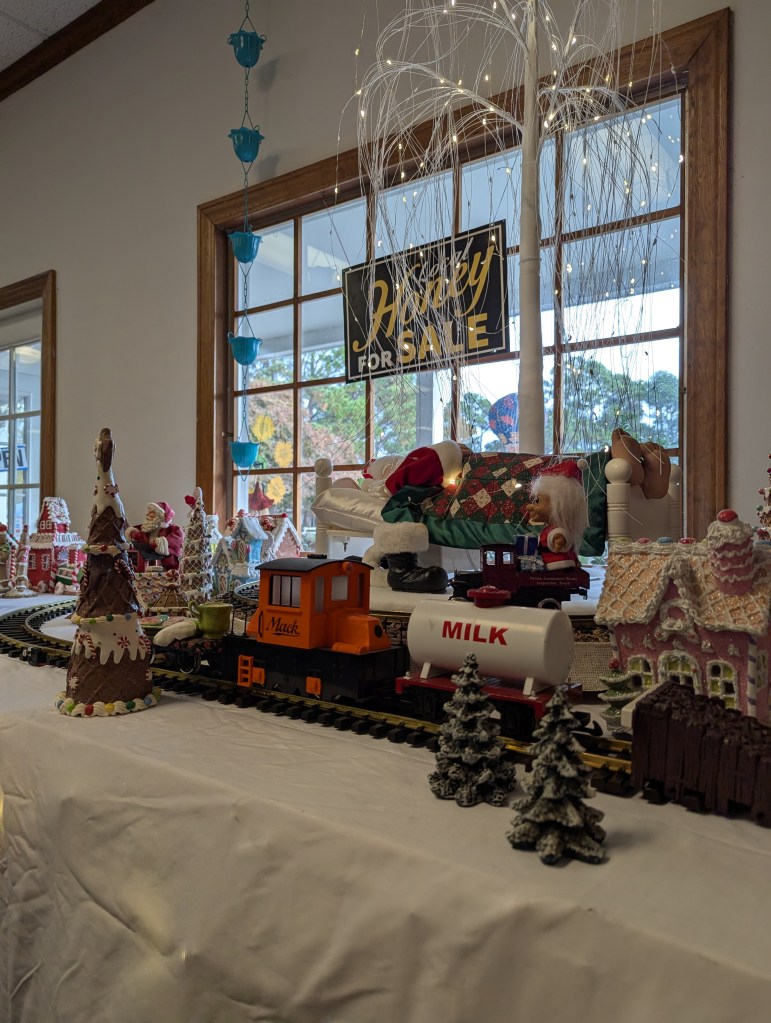
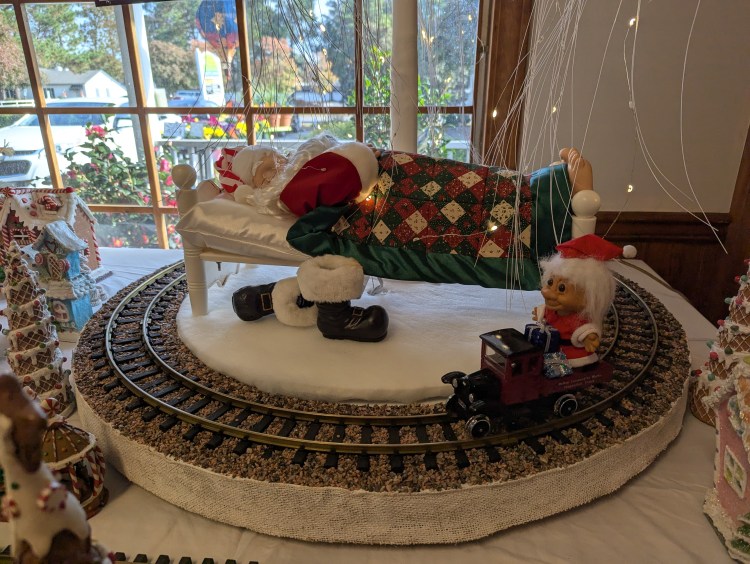
We have one more circle of track that makes a 33″ circle that hasn’t been designated for a display yet so we used half of it to incorporate into a point-to-point track on our 4 foot wide table. The rest of the layout was filled in with a gingerbread/candy assortment that we’ve collected…

…and sleeping Santa.

RIP White’s Nursery

“To Our Valued Customers & Friends

We gave our best effort to keep White’s Nursery & Garden Center going. It is with heavy hearts that we announce we will not be reopening.

Thank you for 68 years of support.”

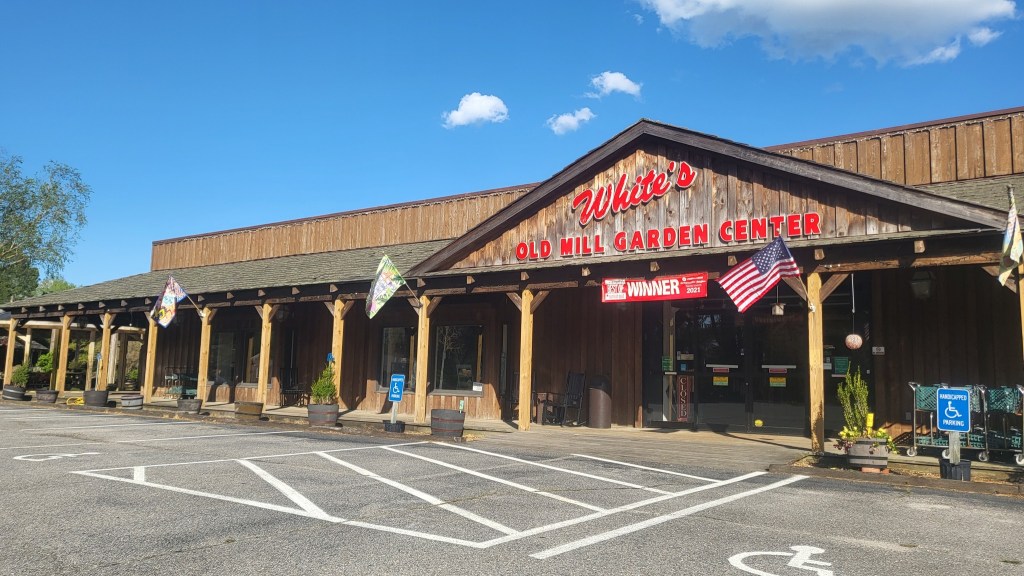
White’s Old Mill Garden Center

A sad day for the Tidewater Big Train Operators club and for the community at large. Our organization has been doing model train shows and displays at White’s Nursery since at least 2010 and the Engineer and I have been participating since 2015. Every spring and fall we were there on Friday setting up, running trains over the weekend and taking down Sunday afternoon. The sense of camaraderie and the joy of sharing our enthusiasm with visitors of all ages made these events deeply fulfilling for us. Our hope is that we can find a new venue or opportunity to continue bringing the joy of model trains to the community, keeping the spirit of our cherished tradition alive and thriving.

White’s Nursery Spring 2024

As previously mentioned, White’s Nursery is our preferred venue for hosting train shows. Each participant has their own designated space, allowing everyone to pursue their individual creative vision.

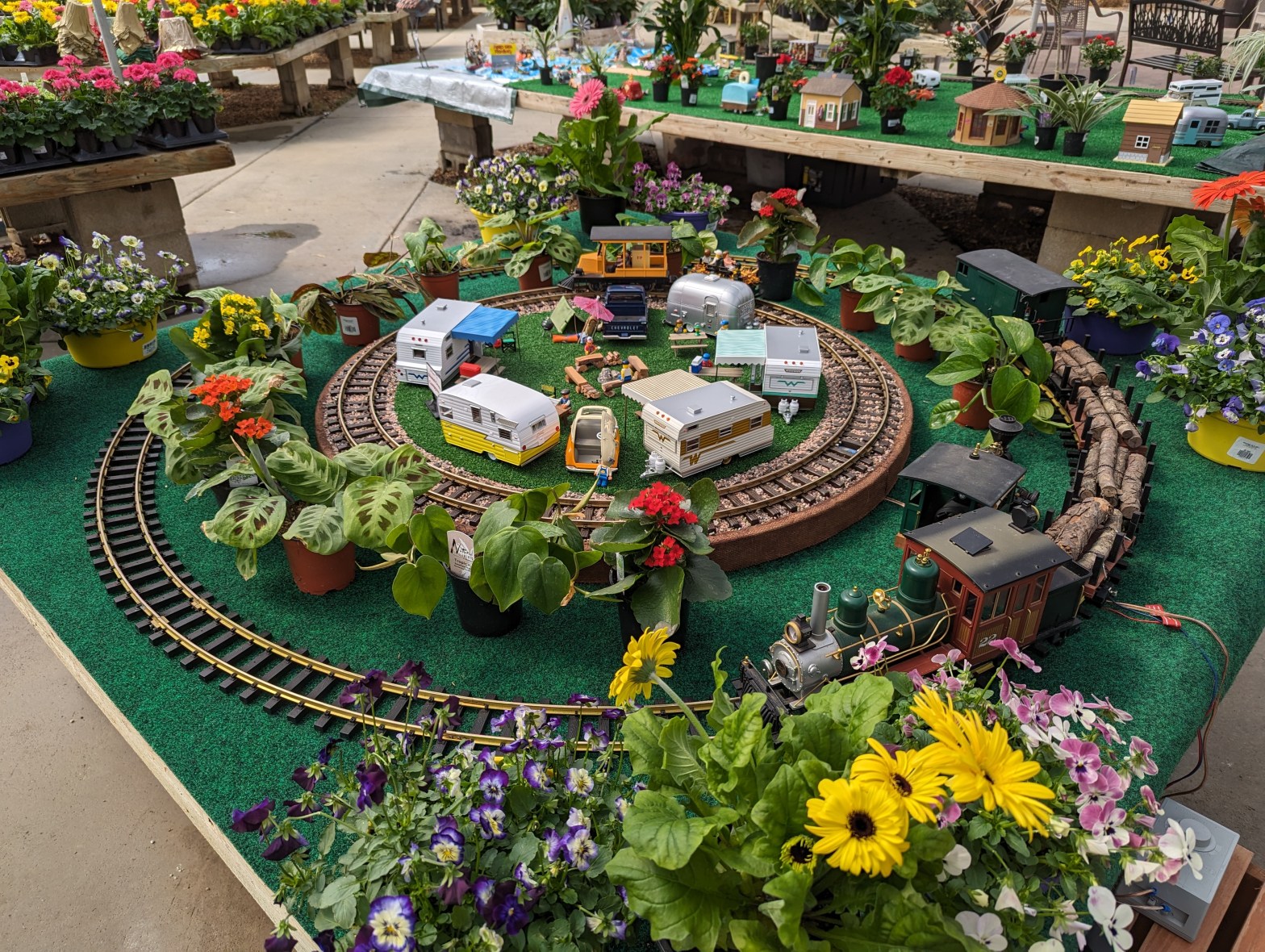
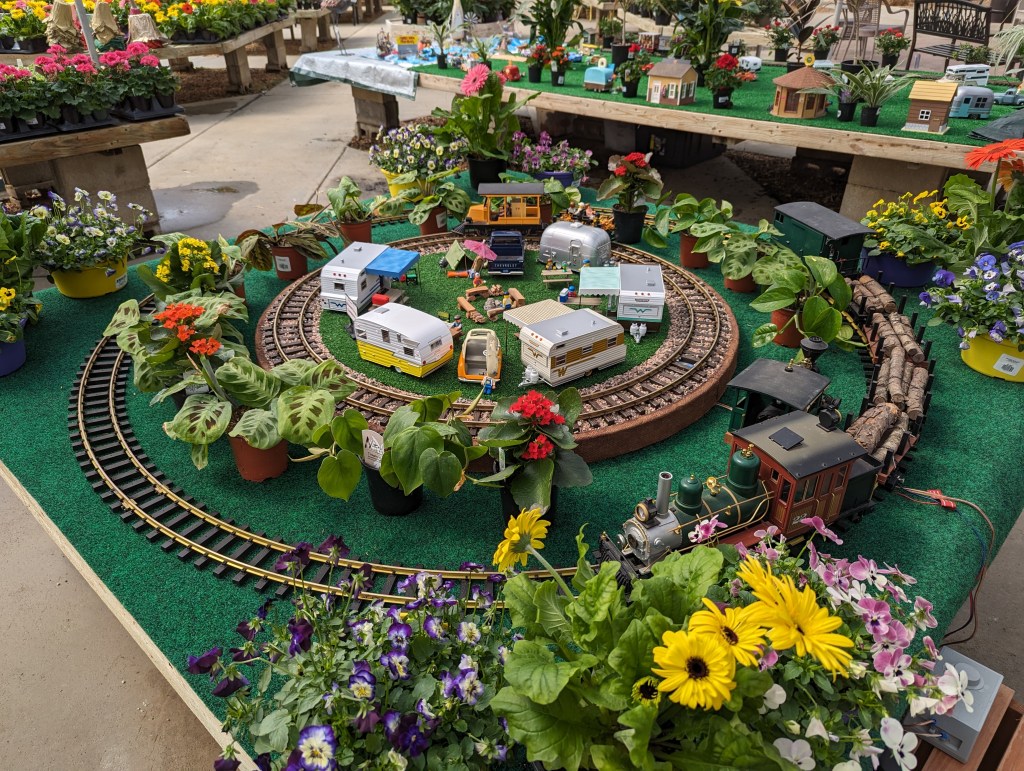
When the Engineer and I first joined the Tidewater Big Train Operators, we were committed to keeping it simple by designing layouts where all components (trains, scenery, background, etc.) could fit in our car. However, we failed at that and almost had to upgrade to a full-sized pickup truck pulling a dual-axle trailer. This season at White’s, we returned to our roots with a six by six foot table, a five-foot outer loop, and a 32″ inner loop. The table was provided by the nursery, so it all fit handily in the back of our car.

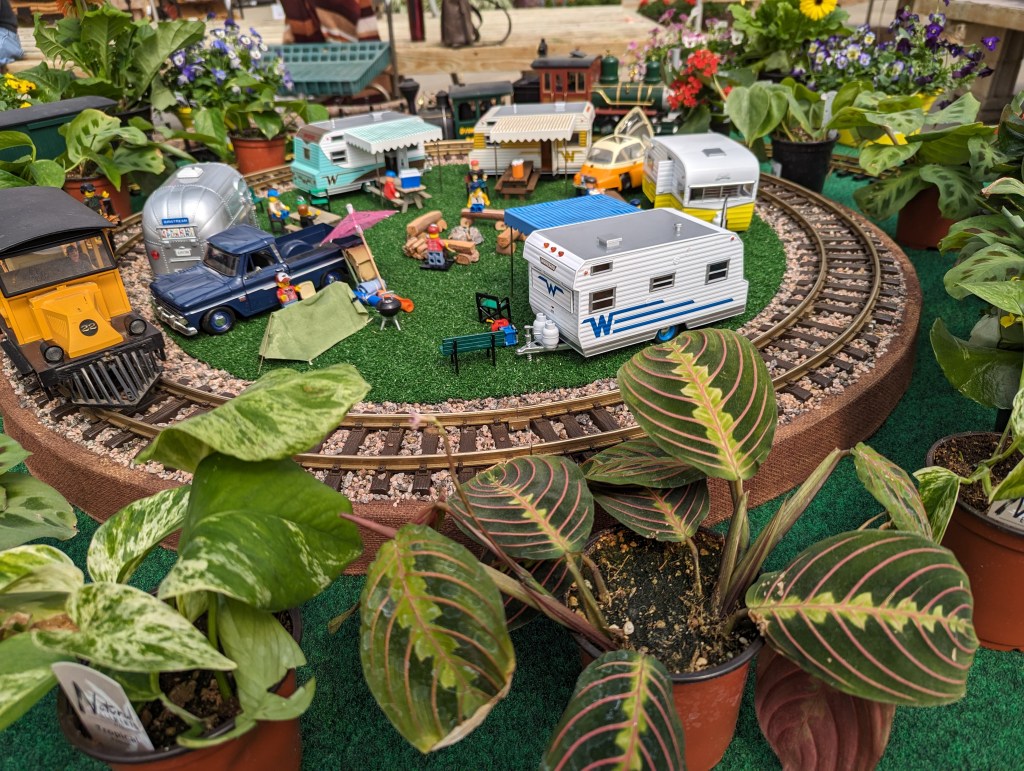
Our very first time setting up at White’s Nursery (November 2015) we did a large campground diorama. Thinking back on it now it was a bit crude, but it was our start in doing train shows and we were happy with it. A couple of years after that we picked up several 1:24 scale model camping trailers – and they have been sitting with our train show “stuff” ever since, never used. We always planned to incorporate them into a new display, perhaps with a scenic backdrop featuring a tranquil lake and some miniature hikers enjoying the great outdoors.

Once we started doing the micro-layouts, it was pretty obvious that a camping scene would fit in perfectly. (The backdrop and lake went by the wayside though.) We thought about all the little details that would make it come to life – tiny tents, miniature campfires, and even little hiking trails. As we worked on it, we realized just how much fun it was adding in all these elements and bringing the scene to life. The Lego people seemed to have their own little adventures as we placed them around the layout. Despite the small scale, the sense of adventure and outdoor exploration was palpable. The 32″ circle of ballasted track with its construction foam base provided a sturdy foundation for our camping scene, and we’ve had so much enjoyment using it. The possibilities for our tiny camping scene seem endless, and the best part is that it all fits neatly in our car, ready to bring joy and wonder wherever we go.

A locomotive that has long been on our wish list was the LGB trains model of a 0-4-4-T Forney. They were only made sporadically between 1992 and 2006, they never seemed to be super popular and I never saw one available at a price we wanted to pay. Until recently when the estate of one of our long time club members was sold, so now we finally have a Forney.